


Simpler Recycling 2026 changes the default approach to household recycling collections in England. For Greater London households and organisations, the practical priority is to keep everyday recyclable packaging separate, follow the instructions for the bins or collector in use, and choose another suitable route for electricals, batteries, bulky objects and non-packaging metal.
The change does not mean that every item containing metal belongs in a dry-recycling bin. A drinks can and an old radiator may both contain metal, but they need different handling. This guide explains the distinction for households, landlords, offices, shops, workshops, tradespeople and construction teams. It is general information, not legal advice.
For many readers, Simpler Recycling 2026 is most useful as a sorting prompt. First identify the item. Then check the instructions from the council, managing agent or contracted waste collector. Finally, keep unusual, mixed, large or potentially hazardous items out of standard dry recycling until the right route is confirmed.
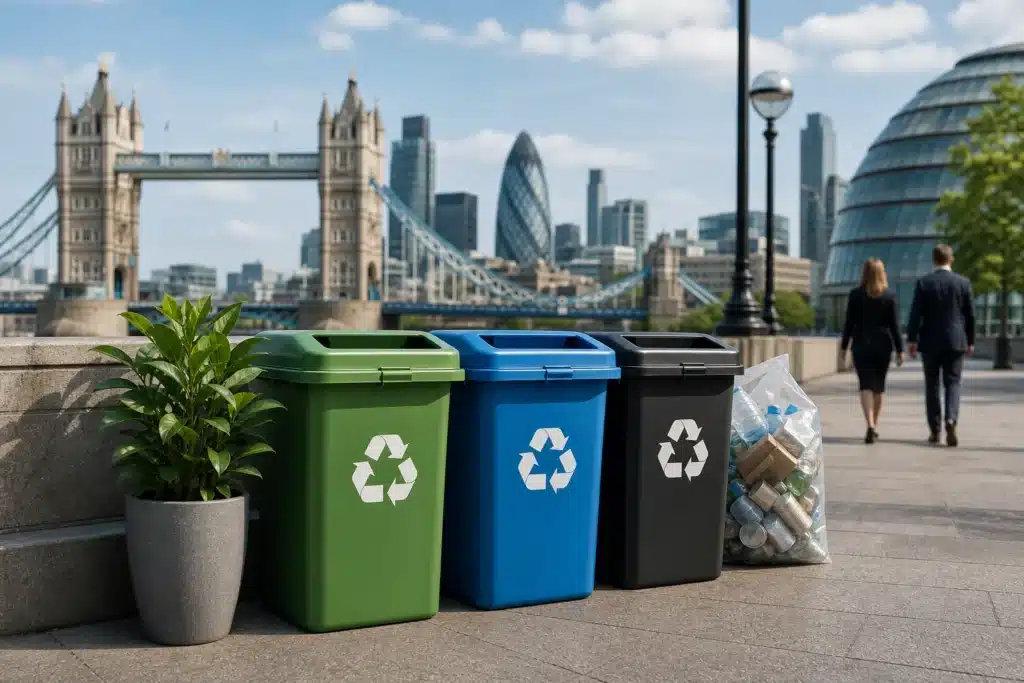
Simpler Recycling 2026: what changes in London?
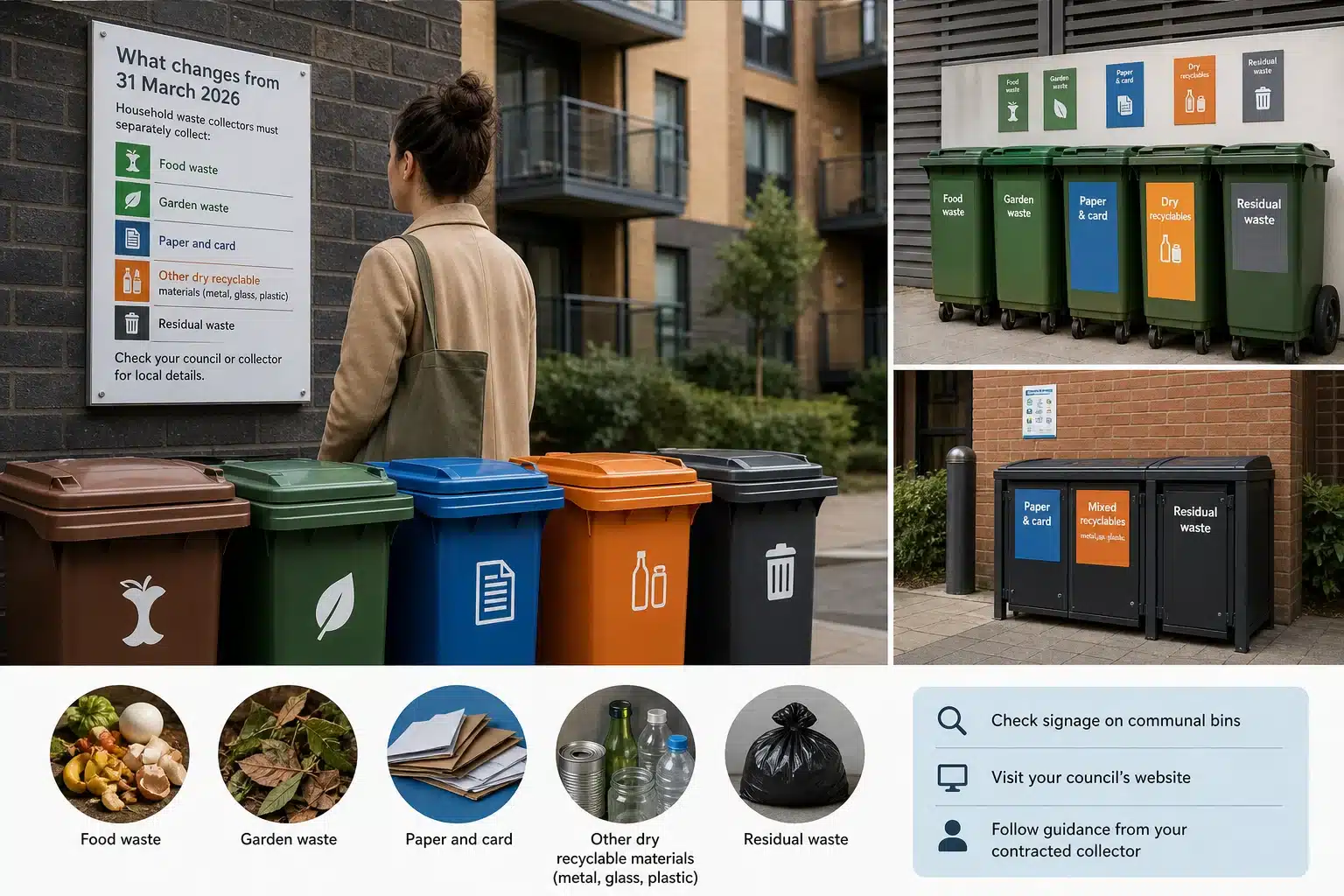
The national household recycling guidance sets a default framework for England. From 31 March 2026, household waste collectors must separately collect food waste, garden waste, paper and card, other dry recyclable materials, and residual waste. The dry recyclable category includes metal, glass and plastic. Flats are included.
In Greater London, containers, sack systems, collection frequencies and accepted-item lists can still vary between boroughs and collection providers. One building may have separate paper and card containers, while another may accept several dry materials in the same container. The national requirement does not remove the need to check signage on communal bins, council information or the guidance issued by a contracted collector.
For metal recycling London users, the important distinction is between clean packaging generated in daily use and material that forms part of a product, property, vehicle, installation or trade activity.
Packaging is usually a dry-recycling question. Cable, pipework, fittings, metal stock and demolition offcuts are typically a separate scrap-management question.
The purpose of Simpler Recycling 2026 is to make separation more consistent, rather than turn every household recycling container into a catch-all metal bin. When an item is unusual, contaminated, mixed or potentially hazardous, pause and check the appropriate route before disposing of it.
Key dates for households, workplaces and micro-firms
The timetable matters because workplace requirements began before the household collection changes. Simpler Recycling 2026 relates to the household date, while workplace arrangements have already required action for most organisations. The dates below are set out in the government guidance.
| Setting | Date | What to plan for |
|---|---|---|
| Workplaces in England | 31 March 2025 | Separate dry recyclables, food waste and residual waste before collection. |
| Households, including flats | 31 March 2026 | Collectors must provide the default separate collection streams. |
| Micro-firms | 31 March 2027 | Businesses with fewer than 10 full-time-equivalent employees have longer to comply. |
The workplace guidance covers more than conventional offices. It includes shops, warehouses, manufacturing facilities, workshops and construction sites. A landlord managing commercial units, a facilities team overseeing a shared office, and a contractor operating a site should each consider how material is separated before their waste collector removes it.
A micro-firm is defined by employee numbers, not by the size of its premises or the amount of waste it produces. Where there is uncertainty about how the definition applies, consult the current workplace recycling guidance and obtain suitable professional advice where necessary.
What households should separate for recycling
For households, the default collection streams are food waste, garden waste, paper and card, other dry recyclable materials, and residual waste. Dry recyclable materials include metal, glass and plastic. This gives residents a clearer starting point for sorting, especially in buildings that previously relied heavily on a single mixed-waste container.
In practical terms, food and drink cans, empty metal food tins and other accepted metal packaging may belong with dry recycling. The local accepted-item list remains important. Check whether loose items are required, whether foil is accepted, whether lids should be separated, and whether a quick rinse is needed to remove food residue.
Do not assume that the same instructions apply to every property. A house may have kerbside containers, while a block of flats may have communal bins and managing-agent signage. If labels are unclear or absent, ask the council, managing agent or collector before placing material in a shared bin. Clear information can reduce contamination and help keep communal areas orderly.
It is helpful to separate the idea of an item being recyclable from it being accepted in a particular bin. Some objects can be recovered through a specialist service but are unsuitable for standard dry-recycling collections because of their size, composition, safety risks or the equipment used to process them.
Packaging metal or scrap metal: choose the right route
Sorting begins with a straightforward question: was the metal item used to package a product, or is it a durable object, component or material from a property, job or business? The answer often suggests the right next step. Local instructions determine whether a particular packaging item is accepted, while larger non-packaging material may be better suited to a separate collection or recycling facility.
| Item type | Typical route | Important check |
|---|---|---|
| Food and drink cans | Household or workplace dry recycling | Follow the local collector’s accepted-material list. |
| Clean metal packaging and foil | Dry recycling where locally accepted | Foil may need to be clean and separated; laminated foil is different. |
| Copper pipe, cable and fittings | Separate scrap route | Confirm material, quantity and access before arranging collection. |
| Aluminium offcuts, brass fittings and stainless steel | Separate scrap route | Keep grades apart where practical. |
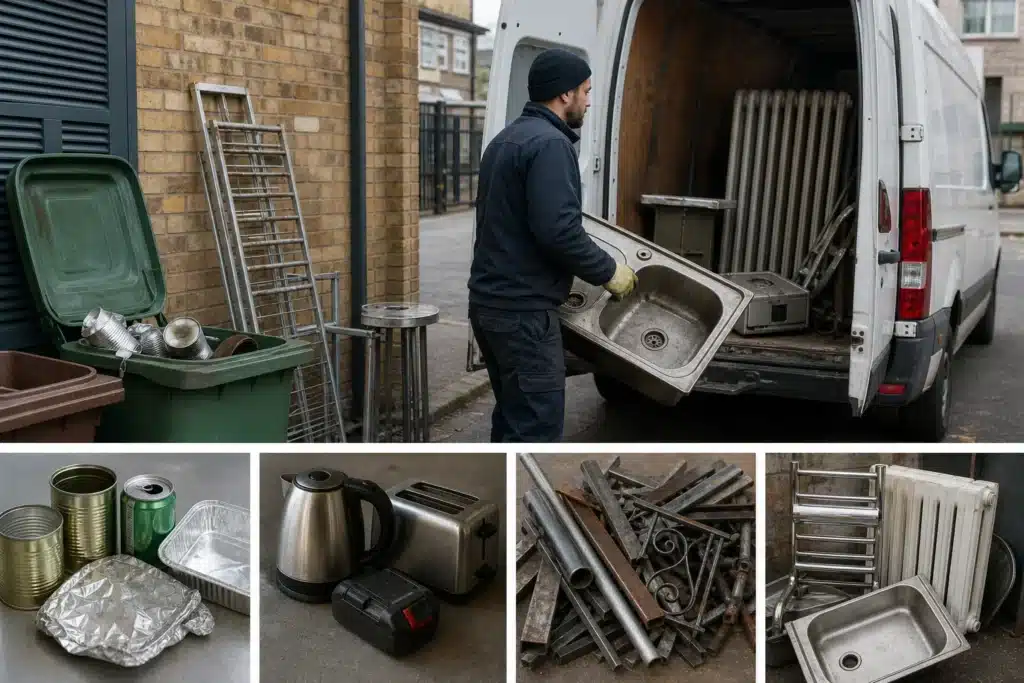
| Radiators, metal fixtures and bulky items | Separate collection, waste site or other local arrangement | Do not place them in dry recycling unless expressly instructed. |
| Electrical products and batteries | Specialist electrical or battery route | Keep them out of dry recycling. |
For non-packaging scrap, separating material can make identification easier. Copper, brass, aluminium, lead, stainless steel, cable and ferrous metal are not the same category, even when they come from the same refurbishment or clearance. Avoid mixing them unnecessarily where a separate metal collection is being considered.
This does not mean every metal item has resale value. Condition, contamination, grade, quantity, handling requirements and current market demand all matter. For market context, review the company’s scrap metal prices information and confirm the material before making plans around a collection.
Metal items that should not go in dry recycling
The official household guidance identifies items that do not need to be included in dry-recycling collections. These include electrical items, batteries, kitchenware, kettles, irons, pipes and laminated foil. They require an appropriate alternative route rather than a household dry-recycling bin.
Metal packaging that contained products such as paint, engine oil or antifreeze is also outside the required household dry-recycling collection. These containers can create handling and contamination issues. Follow product instructions, council information or specialist disposal guidance instead of treating them as ordinary empty cans.
Electrical equipment and batteries need particular care. They may contain components or substances requiring specialist treatment, and damaged or incorrectly discarded batteries can create fire risks. Keep them separate, avoid crushing them, and use a retailer take-back point, household waste recycling centre or another authorised local route where available.
Kitchenware can be confusing because it looks like straightforward metal. Pots, pans, cutlery and utensils are not ordinary packaging and should not automatically be placed in dry recycling. The same principle applies to pipes, taps, tools, mixed-material fixtures and objects with plastic, glass, rubber or electronic components.
Never dismantle sealed, pressurised, leaking, heavily contaminated or potentially hazardous equipment simply to separate metal. Seek advice from the appropriate service first. This is particularly relevant to material from garages, workshops, building projects and commercial clear-outs.
Workplace recycling: practical steps for offices, shops and workshops
Since 31 March 2025, workplaces in England have been expected to separate dry recyclable materials, food waste and residual waste before collection. The detailed arrangement depends on the organisation’s waste contract and premises, but the working principle is to keep these streams apart rather than mixing everything into general waste.
For organisations, Simpler Recycling 2026 is also a useful reminder to review existing systems. Start by mapping where waste is generated: kitchen areas, customer spaces, stockrooms, loading bays, maintenance rooms, workbenches and external compounds may each produce different materials.
- Place clearly labelled containers where people actually use materials.
- Use plain labels and pictures where helpful, especially in shared spaces.
- Brief staff, cleaners and contractors on the site’s chosen system.
- Check with the collector what it accepts, how contamination is handled and when containers are presented.
- Review whether packaging recycling is being mixed with trade scrap, electrical items or batteries.
- Keep a simple process for reporting unclear labels, overflowing bins or unsuitable items.
For shops and offices, cans and accepted packaging may be a routine dry-recycling stream, while broken furniture, fixtures, cable, IT equipment and refurbishment materials need separate decisions. Workshops may generate metal stock, turnings, cable, offcuts or worn components that should not be placed in the same bin as food packaging.
Landlords and facilities managers can support occupiers by making the route visible. A well-labelled recycling point, an agreed contractor process and planning for moves or fit-outs are generally more effective than asking people to guess. Update site-specific instructions when a collection contract or tenant mix changes.
Construction sites: keep recyclable materials separate
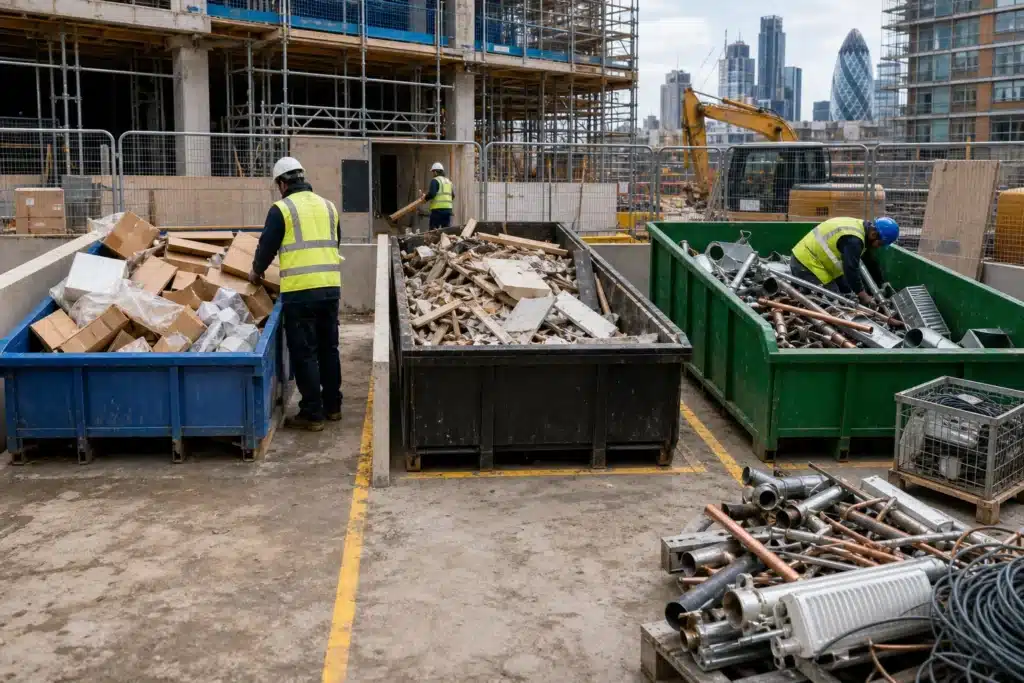
Construction site recycling needs early planning because a site can generate packaging, food waste, timber, rubble, insulation, electrical components and substantial quantities of metal at the same time. The workplace guidance says specified recyclable materials must be kept separate from other construction waste and should not be mixed or compacted with it.
For a London project, establish practical zones before demolition, strip-out or installation work begins. One area may be for recyclable packaging, another for general construction waste, and another for recoverable scrap metal. The layout should reflect available space, security, vehicle access and collectors’ requirements.
Metal offcuts, pipework, cable, ducting, radiators, fittings and dismantled fixtures are not the same as food tins or drinks cans. Keeping them separate can make clearance safer and more orderly, while helping the site team identify what needs a specialist route. It can also prevent usable material being mixed into a load that is difficult to sort later.
Brief subcontractors before work begins. Explain which skips or containers are for packaging recycling, which are for general waste, and where metal is to be placed. Do not rely on assumptions about mixed loads, and do not compact recyclable material with construction waste where the guidance says it should remain separate.
Before arranging a metal collection, confirm the approximate quantity, material types, site access, loading arrangements and whether the material is clean or mixed. This is particularly important where cable, plant, tanks, painted metal, unknown equipment or material from older buildings is involved. Collection suitability and availability should be confirmed in advance.
Landlords and property managers: preparing shared properties
Shared properties need a clear system because residents, caretakers, contractors and cleaners may all use the same waste area. Household requirements include flats, but the day-to-day arrangement may depend on the council, collection contractor and space available for communal containers.
Use concise signage that distinguishes everyday packaging recycling from items needing another route. For example, a sign can direct accepted cans to dry recycling while explaining that batteries, electricals, kitchenware and bulky metal should not be left beside communal bins. This can help prevent blocked access, contamination and unsafe fly-tipping.
Void-property clearances and maintenance work should be planned separately from normal household waste. Pipework, old fittings, cable, metal shelving and trade offcuts may need a scrap route, while appliances and electrical goods require their own assessment. Check bulky-waste arrangements with the relevant borough or provider rather than assuming a communal bin will accept the item.
For multi-site portfolios, a short procedure can help: identify the item, check local collection rules, record the chosen route and confirm contractor access. It should still allow for borough-specific variation, particularly where sites use different waste providers.
A practical metal-sorting checklist
Use this checklist before taking an item to a bin, arranging a clearance or asking about separate scrap collection. It is designed to reduce guesswork, not replace instructions from a local authority, waste contractor or specialist provider.
- Identify the item. Decide whether it is packaging, electrical equipment, a battery, a bulky appliance, a pipe, cable, fitting, offcut or another durable metal object.
- Check the local route. For packaging, follow the household or workplace collector’s current guidance.
- Separate materials where practical. Keep copper, brass, aluminium, lead, stainless steel, cable and ferrous metal apart if this can be done safely.
- Leave mixed or risky items intact. Do not dismantle sealed, pressurised, contaminated or hazardous objects.
- Remove obvious non-metal attachments only when safe. Loose cardboard or packaging may be removable, but do not force components apart.
- Keep batteries and electricals separate. Use an appropriate specialist route.
- Take clear photographs for unusual items. They can help a collector assess material and access requirements.
- Confirm before booking. Ask about material suitability, quantity, site access and current availability.
This approach works for homes as well as businesses. A householder clearing a shed may have a mixture of cans, tools, cable and electrical items. A contractor may have pipework, offcuts and packaging. Treating each category appropriately is more useful than describing the whole pile simply as metal.
Using a separate scrap metal collection in London
Premier Scrap Trading Ltd provides mobile scrap metal collection in London across Greater London for homes, landlords, tradespeople, businesses, workshops, shops, offices, construction sites and commercial or industrial properties. Service coverage was checked on 3 August 2026. Coverage does not mean every material, location or time slot can be accepted, so confirm details before booking.
The company lists copper, aluminium, lead, brass, cables, car batteries and stainless steel among its material categories. Materials can be weighed and, where material has resale value, eligible payment is made by bank transfer after weighing. Values vary by grade, weight, condition and market demand, so they are not fixed and should be checked at the time of enquiry.
Old washing machines and fridges are not accepted. Electrical items, batteries, unusual equipment, mixed loads and potentially hazardous material should also be discussed before a collection is arranged. A clear description, photographs, approximate quantity and access information help establish whether a separate route may be suitable.
For an overview of the service and material categories, see scrap recycling in London. Customers can also review the published Greater London areas covered page, checked on 3 August 2026, while remembering that collection availability must be confirmed directly.
Commercial waste responsibilities and local arrangements
Businesses should ensure waste is stored securely and collected through appropriate arrangements. The City of London’s commercial waste guidance says businesses should use an authorised business for transport and complete a Waste Transfer Note when waste is transferred, retaining it for at least two years.
That City of London guidance is useful context, but it should not be treated as a complete statement of arrangements in every London borough. Waste contracts, collection rules, local restrictions and building-management procedures can differ. Businesses should check their own contractor’s instructions and their local authority’s requirements.
For organisations, good segregation supports practical record-keeping. Know what leaves the premises, who collects it, and which stream it belongs to. Keep packaging recycling distinct from trade scrap, and ensure staff understand when an item requires a specialist route rather than the normal collection.
If a refurbishment, clearance or construction project is planned, agree the waste process before materials begin to accumulate. This is generally easier than sorting an unlabelled mixed pile after access becomes limited or a deadline approaches.
Arrange the right recycling route for your metal
Simpler Recycling 2026 gives London households a clearer default for separating everyday recyclable materials, but it does not change the need to choose the right route for larger, durable or specialist metal items.
Use local household or workplace instructions for accepted packaging, keep electricals and batteries out of dry recycling, and plan separately for trade scrap and bulky objects.
For non-packaging metal in Greater London, call 07931 361 034 034 or book a collection online with Premier Scrap Trading Ltd to confirm materials, access, current availability and current prices.
Related London scrap services
Frequently asked questions
When do household Simpler Recycling requirements begin?
The default household collection requirements in England apply from 31 March 2026, including for flats.
Does Simpler Recycling mean all metal can go in my recycling bin?
No. Dry recycling covers accepted packaging materials, while electricals, batteries, pipes, kitchenware and bulky metal need another suitable route.
What metal packaging can usually be recycled?
Food and drink cans and other empty metal packaging may be accepted in dry recycling, but you should follow your local collector’s instructions.
When did workplace recycling rules start in England?
Workplace separation requirements began on 31 March 2025 for most workplaces in England.
Which workplaces are covered by the recycling requirements?
The guidance includes offices, shops, workshops, warehouses, manufacturing facilities and construction sites, among other workplaces.
When is the deadline for micro-firms?
Micro-firms with fewer than 10 full-time-equivalent employees have until 31 March 2027 to meet the workplace requirements.
Can construction-site metal be mixed with general construction waste?
Specified recyclable materials should be kept separate from other construction waste and should not be mixed or compacted with it.
Can Premier Scrap Trading Ltd collect my metal item?
Call 07931 361 034 or book online with item details, photographs, quantity and access information to confirm suitability and current availability.