


UK CBAM 2027 starts on 1 January 2027 and matters to London businesses importing certain aluminium, iron and steel goods. The practical outcome is simple: do not decide whether a shipment is covered merely because it contains metal or is described as scrap. Check the commodity code, who makes the customs declaration, the relevant import values and the records supporting your conclusion.
This guide is general operational information for importers, manufacturers, fabricators, contractors, tradespeople and scrap customers. It is not legal, tax, customs-classification or carbon-accounting advice. HMRC guidance and commodity-code information should be checked before importing or making a registration decision, especially where a product is mixed, processed or difficult to classify.
For businesses handling both imported products and locally arising metal, good descriptions, weights and separation can make stock control and recycling planning clearer. That discipline is useful, but it does not itself decide CBAM treatment or create relief.

What is UK CBAM 2027?
The UK Carbon Border Adjustment Mechanism is a new charge framework for specified goods imported into the UK. According to HMRC’s policy summary, it takes effect from 1 January 2027 and covers listed commodity codes in five sectors: aluminium, cement, fertiliser, hydrogen, and iron and steel.
For many London metal supply chains, the immediate relevance is aluminium and iron and steel. A fabricator may buy aluminium sections from overseas; a contractor may import steel components; a distributor may receive semi-finished goods for onward sale. The mechanism is not a general charge on every item containing aluminium or steel. The current list of commodity codes, exclusions and the circumstances of the import are central.
Responsibility generally follows the customs declaration. HMRC says the liable person is normally the person in whose name the declaration is made, or the person on whose behalf it is made. Businesses should therefore establish the importer of record for each shipment rather than assuming that a supplier, freight forwarder or end customer carries the obligation.
Start with the current https://www.gov.uk/government/publications/carbon-border-adjustment-mechanism-cbam-policy-summary/carbon-border-adjustment-mechanism-cbam-policy-summary. It explains the policy position, including the sectors, liability approach, threshold tests and emissions framework. HMRC may publish further operational material, so a historic note or supplier email should not be treated as the final answer.
Which steel, aluminium and scrap imports are in scope?
Scope is commodity-code specific. That is the most important starting point for CBAM aluminium imports and CBAM steel imports. First identify what is being imported, then verify the commodity code used for customs purposes against current HMRC material. A product’s commercial name, invoice wording or appearance may be useful evidence, but it is not a classification ruling.
Relevant imported scrap products in the aluminium and iron and steel sectors are excluded at commencement where they fall within the applicable excluded commodity codes. This is significant for businesses that genuinely import eligible scrap grades. However, calling a material “scrap”, “recycling feedstock” or “offcuts” does not by itself establish that it is excluded. The exact code and import facts still matter.
Conversely, some finished and semi-finished metal goods can be in scope. A business should not conclude that a fabricated component is outside the mechanism simply because it is no longer raw metal. Product form, code and the latest scheme rules need checking. Where classification is uncertain, use the official guidance and obtain appropriate customs support before relying on an exclusion.
It also helps to separate two questions that are often confused. The first is whether an imported good falls within the relevant CBAM list. The second is whether the importer becomes liable after applying the registration tests. A commodity can be potentially in scope without a particular business immediately needing to register; equally, a business should preserve enough evidence to show why it concluded that an import was outside scope.
London firms with several suppliers should build this check into purchasing and logistics rather than leaving it to year end. A procurement description such as “aluminium profile” may need a more precise technical specification, customs code and country-of-origin information. Good purchasing data makes later review substantially easier.
UK CBAM 2027 decision table
This table is an operational triage tool, not a classification ruling or tax assessment. Use it to identify the next document or question needed for each shipment.
| Situation | Immediate check | Practical next step |
|---|---|---|
| Goods are of UK origin and not being imported. | Confirm the transaction and origin evidence. | Keep normal purchasing and stock records; CBAM import checks may not be the relevant issue. |
| Imported goods appear outside the current listed commodity codes. | Verify the customs code and retain the basis for the decision. | Record why the item was treated as outside scope and review if the product changes. |
| Imported material is described as aluminium or iron/steel scrap. | Check whether its specific commodity code is an excluded scrap code. | Do not rely on the description alone; retain import and classification evidence. |
| Imported aluminium or iron/steel goods may be listed. | Identify the importer of record, code, customs value and supplier data available. | Monitor values, request relevant product and emissions information, and check HMRC guidance. |
| Relevant import values are increasing. | Apply both £50,000 registration tests, not a simple annual total. | Set a regular review date and obtain specialist advice if liability may arise. |
Understanding the £50,000 registration tests
The £50,000 figure is not a single annual spending threshold. HMRC’s policy summary describes two tests: a forward-looking test based on the value of relevant imports expected in the next 30 days, and a backward-looking test based on relevant imports in the previous 12 months. Both should be built into routine monitoring.
In practical terms, an importer should not wait until the end of a financial year and add up all metal purchases. A new project, bulk order or change of supplier may affect the forward-looking position quickly. Similarly, a pattern of smaller qualifying imports can build through the backward-looking period. Finance, purchasing and customs teams need a shared view of which import values are relevant.
HMRC states that registration opens on 1 January 2028. For the first year of the scheme, a business that becomes liable has until 31 January 2028 to register. Those dates should be rechecked before action because implementation guidance can be updated. The important preparation point for 2027 is that records and value monitoring cannot sensibly begin only when registration opens.
A useful internal process is to assign a named owner, maintain a shipment tracker and review it monthly, with an additional review before significant orders. The tracker can show the commodity code, declared importer, customs value, supplier, arrival date, provisional scope decision, evidence location and whether the business is approaching either test.
This process is particularly relevant for businesses whose imports fluctuate. A London architectural metalworker may ordinarily buy domestic material but import a large run of profiles for one contract. A construction supplier may handle recurring components whose volume rises with a project programme. Regular monitoring is more useful than assumptions based on last year’s purchasing.
Records to keep before and after importing
HMRC says importers need to keep records, including where they conclude that they are not liable. That point deserves emphasis. A file that only contains documents for imports believed to be in scope leaves a gap: the business should also be able to explain why other shipments were excluded from its CBAM review.
A practical record set may include:
- the customs declaration and the commodity code used;
- commercial invoices, packing lists and product specifications;
- supplier name, country details and purchase correspondence;
- the customs value and internal calculations used for monitoring;
- the identity of the importer of record or declaration representative;
- the basis for any scope or excluded-scrap conclusion;
- relevant supplier information about direct embodied emissions for goods that may be in scope; and
- emails, adviser notes and internal approvals showing how a decision was reached.
The policy framework refers to direct embodied emissions. It anticipates actual verified emissions data and government default values as implementation develops. Businesses should avoid making their own unsupported emissions assumptions. Instead, ask suppliers early what product, production and emissions evidence they can provide, then compare that information with current HMRC requirements.
Supplier contracts are worth reviewing too. They can clarify who supplies technical specifications, who gives origin information, what happens if product details change and how long records are retained. They do not move a statutory liability simply by using a label, but clear contract language can reduce avoidable uncertainty and help teams obtain data before goods arrive.
Store records in a consistent place and make them searchable by shipment, purchase order and commodity code. This is less glamorous than procurement negotiations, but it is often the difference between a quick evidence-based review and a time-consuming reconstruction months later.
Preparation checklist for London metal businesses
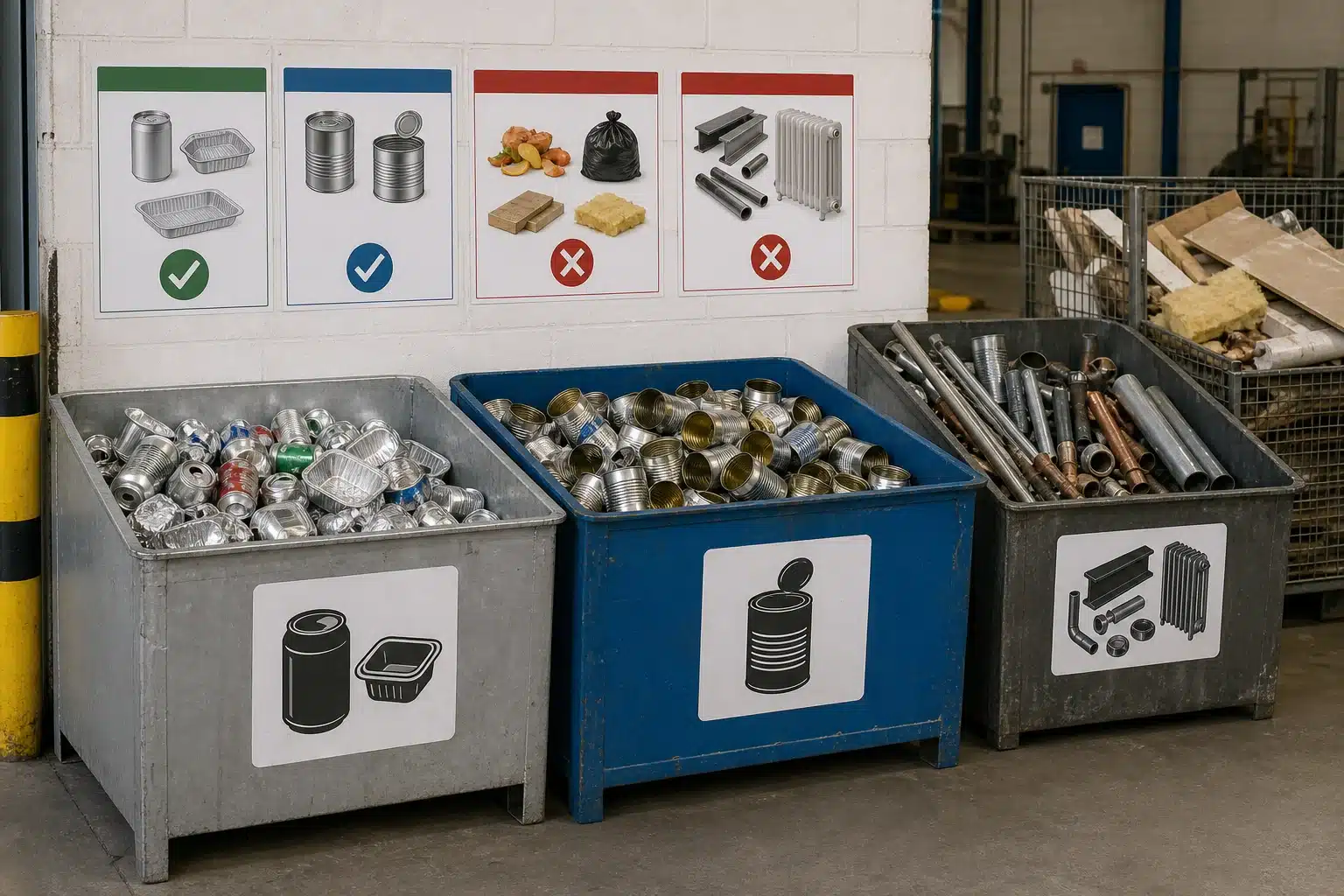
UK CBAM 2027 preparation is most manageable when it becomes part of ordinary purchasing, receiving and accounts routines. The following checklist can be adapted for a small importer or a larger multi-site business.
- Map imported products. List the aluminium and iron or steel goods your organisation imports, including occasional project purchases.
- Verify commodity codes. Check the code used in customs declarations and preserve the supporting product information.
- Identify the declarant. Establish in whose name each customs declaration is made and whether an agent acts on that person’s behalf.
- Monitor relevant values. Track the figures needed for both the forward-looking 30-day and backward-looking 12-month tests.
- Ask suppliers early. Request clear descriptions, technical information, origin evidence and relevant emissions data where required.
- Review commercial terms. Clarify document responsibilities, information deadlines and change-notification procedures.
- Set retention controls. Keep declarations, invoices, calculations and correspondence together and assign an internal owner.
- Escalate uncertainty. Use current HMRC information and a qualified customs, tax or carbon-accounting adviser where the code, liability or data position is unclear.
For ongoing updates, use the GOV.UK collection page: https://www.gov.uk/government/collections/carbon-border-adjustment-mechanism. It brings together current government material and is a better starting point than relying on commentary written before a change in the rules.
How scrap segregation and provenance support better supply-chain records
Segregating metal is a practical operational habit. Clear descriptions of grades, separate storage where feasible, recorded weights and collection paperwork can support inventory control, procurement decisions and recycling arrangements. For a workshop or construction site, it can also reduce confusion between usable stock, locally generated offcuts, mixed waste and material set aside for collection.
These practices are helpful to a broader supply-chain record, but they do not automatically grant CBAM relief or prove that an import is excluded. Recycling metal, using recycled content, arranging a collection or retaining a weight ticket does not replace commodity-code checks, customs documents or threshold monitoring. Carbon Price Relief, where available, is subject to conditions in the scheme rather than a general recycling claim.
Keep locally arising scrap distinct in internal records from purchased scrap and imported metal goods. A simple record might state where the material arose, its approximate grade, weight, collection date and destination. That information can help a business answer ordinary operational questions without incorrectly treating local recycling paperwork as evidence of an import classification.
Premier Scrap Trading Ltd provides scrap metal collection in London across Greater London for confirmed eligible materials. The business can discuss material identification and collection planning, including access and practical preparation. It does not provide CBAM, customs, tax or legal advice. The company’s scrap recycling in London information and scrap metal prices page are useful service references, but current price depends on grade, weight, condition and market demand.
Do not include old washing machines or fridges in a proposed metal collection. Confirm unusual, mixed or potentially hazardous materials in advance. This avoids a wasted journey and allows the collection discussion to focus on what can actually be handled.
Example: a London fabricator reviewing aluminium and steel supplies
Consider a London fabricator that buys imported aluminium sections for a façade project, imports steel components for a separate installation and produces clean aluminium and steel offcuts in its own workshop. It should not start by treating all three material streams in the same way.
For the imported sections and components, the fabricator identifies the declared commodity codes, checks the latest CBAM list, records who is named on the customs declarations and enters relevant values into its monitoring sheet. It asks the overseas suppliers for accurate product descriptions and any emissions information that current guidance requires. If a product’s classification is uncertain, it seeks appropriate advice rather than deciding on the basis of a catalogue description.
For the workshop offcuts, the fabricator records the material type, keeps grades reasonably separate and arranges recycling collection when quantities justify it. Those records assist stock management and demonstrate orderly handling of materials, but the company does not claim that the offcuts alter the CBAM outcome for the imported products.
If the business also imports a product described as scrap, it checks the precise scrap metal commodity codes and the relevant exclusions instead of assuming an exemption. This is where a small terminology error can lead to a poor compliance decision: “scrap” in everyday conversation is not enough to determine the customs result.
The same logic applies to a contractor clearing site metal. Locally generated steel offcuts and removed metal may be suitable for recycling, subject to confirmation, while imported project components remain an import-record question. Keeping these workflows distinct makes the team’s records clearer and prevents a recycling activity being mistaken for CBAM compliance.
Common mistakes to avoid
- Assuming every steel or aluminium import is covered. The scheme applies to specified commodity codes, not broad material labels.
- Using “scrap” as a conclusion. Relevant excluded scrap codes exist, but the code and facts must be verified.
- Treating £50,000 as one yearly cap. Monitor both the 30-day forward-looking and 12-month backward-looking tests.
- Waiting until registration opens to collect evidence. The first scheme year begins on 1 January 2027, while HMRC says registration opens on 1 January 2028.
- Ignoring imports considered outside scope. Keep the evidence behind that decision as well as records for potentially in-scope goods.
- Confusing CBAM with steel safeguards or quota measures. They are separate trade arrangements and should be checked separately.
- Assuming recycling changes liability automatically. Segregation and provenance are useful controls, not a substitute for CBAM analysis.
- Relying on outdated notes. Recheck official guidance, commodity-code material and implementation detail before acting.
Official sources to check
Guidance was checked on 3 August 2026.
CBAM operational details may change, so review current official information before importing, registering or making a classification decision.
https://www.gov.uk/government/collections/carbon-border-adjustment-mechanism
For a short policy explanation, HM Treasury’s factsheet is also available at https://www.gov.uk/government/publications/factsheet-carbon-border-adjustment-mechanism-cbam. For collection arrangements rather than compliance advice, see areas covered across Greater London and the contact page.

Plan for UK CBAM 2027 without making assumptions
UK CBAM 2027 requires a practical, evidence-led approach: identify the imported product, verify the commodity code, establish who is responsible for the customs declaration, monitor both threshold tests and retain the documents behind every decision. Imported aluminium and iron or steel scrap may be excluded where the applicable commodity code provides for that result, but neither a commercial label nor a recycling record is enough on its own.
For London businesses, the most useful next step is to bring customs, procurement, finance and receiving records together before significant shipments arrive. Recheck HMRC guidance and obtain professional advice for uncertain classifications, liability or emissions questions.
If you need scrap metal collection in London, call Premier Scrap Trading Ltd on 07931 361 034 or book a collection online to confirm the material, access arrangements and current price. Collection coverage across Greater London was checked on 3 August 2026.
Related London scrap services
Frequently asked questions about UK CBAM 2027
When does UK CBAM 2027 start?
The UK Carbon Border Adjustment Mechanism starts on 1 January 2027 for specified imported goods.
Are all steel and aluminium imports covered by UK CBAM?
Are aluminium and steel scrap imports automatically excluded?
No. Relevant scrap codes are excluded at commencement, but the specific customs commodity code and import circumstances must be checked.
Who is normally liable for UK CBAM?
How does the £50,000 CBAM threshold work?
It uses a forward-looking test for relevant imports expected in the next 30 days and a backward-looking test for the previous 12 months.
When can a business register for UK CBAM?
What records should an importer keep for CBAM?
Keep customs declarations, commodity-code evidence, invoices, import values, supplier details, product information and the basis for scope decisions.
Can Premier Scrap Trading Ltd advise on CBAM or customs classification?
No. Premier Scrap Trading Ltd can discuss confirmed eligible scrap metal collection in London, but CBAM and customs questions should be checked with HMRC and an appropriate adviser.