


ÖBB Rail Cargo Group’s 500 wagons: the verified position
Rail logistics for metal recycling can be an important part of industrial supply chains, but the equipment and material named in a rail announcement matter. ÖBB Rail Cargo Group’s reported arrangement with ERR European Rail Rent retains 500 Shimmns wagons for steel coils and metal strip; it does not show that 500 wagons were newly added for scrap-metal flows.
For householders, tradespeople and businesses, the practical outcome is straightforward: do not use this European steel-freight story to judge local collection capacity or scrap values. For scrap metal collection in London, material type, quantity, access, grade and current demand remain the useful details to establish before arranging a collection.
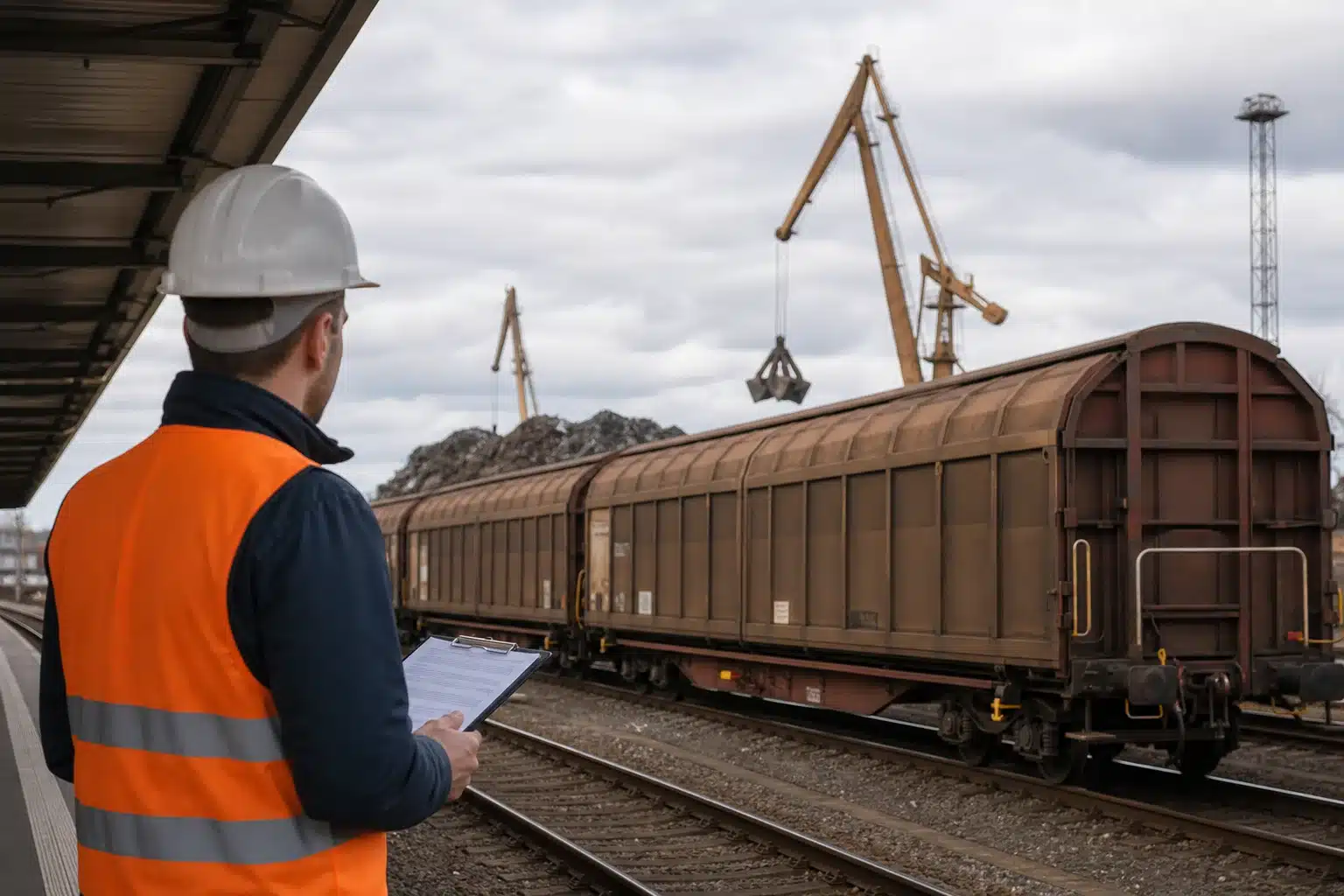
rail logistics for metal recycling: practical guidance
The original claim needs a clear correction. Rail Cargo Group reported that its partnership with ERR European Rail Rent had been extended, keeping 500 existing Shimmns wagons available in its fleet. The company’s account describes these wagons as optimised for transporting coils, including coiled steel and metal strip, for steel customers in Austria and elsewhere in Europe.
That wording is significant. Retaining wagons through an extended commercial arrangement is not the same as ordering, buying or adding 500 additional vehicles. It is also not the same as establishing a dedicated service for recyclable scrap. A useful reading of freight news starts by separating what the source confirms from what a headline may imply.
Shimmns wagons are associated in this report with manufactured steel products moving between industrial locations. Coils can be heavy, dense and sensitive to damage or movement.
Their transport needs differ from the handling of loose demolition metal, factory offcuts, end-of-life material or mixed ferrous loads. The source therefore supports a story about continuity of steel-coil rail capacity, not a specific expansion in scrap transport.
The report is a European logistics development, rather than a direct update about Greater London. It does not state that the wagons serve London collection routes, that they alter UK recycling arrangements, or that they affect the availability of mobile collections. It also provides no basis for a claim about local values for copper, aluminium, brass, lead, cable, batteries or stainless steel.
Checking the language used in the original report is especially useful in metal markets, where a short announcement can travel quickly through trade publications and social media. Terms such as “extended”, “retained”, “leased”, “reassigned” and “added” have different operational meanings. Treating them as interchangeable can produce an inaccurate conclusion about capacity, investment or the materials being moved.
For readers following rail logistics for metal recycling, the disciplined conclusion is that the 500-wagon announcement provides context about a steel supply chain. It should not be presented as proof of a new scrap-metal programme. The distinction protects readers from drawing conclusions about collection availability, processing demand or price movements that the evidence does not support.
Why wagon type matters when moving metals
Rail wagons are selected around the physical characteristics of a load and the requirements of the journey. Weight, shape, containment, loading method, weather exposure, securement, unloading equipment and destination all influence the choice. “Metal” is far too broad a description to identify the right equipment on its own.
Covered or purpose-designed coil wagons are intended to carry coiled steel products in a controlled way. Steel coils are manufactured goods, usually supplied in regular dimensions and loaded with specialist lifting equipment. The aim is to keep the product stable and protected while it travels between mills, service centres, manufacturers or other industrial customers.
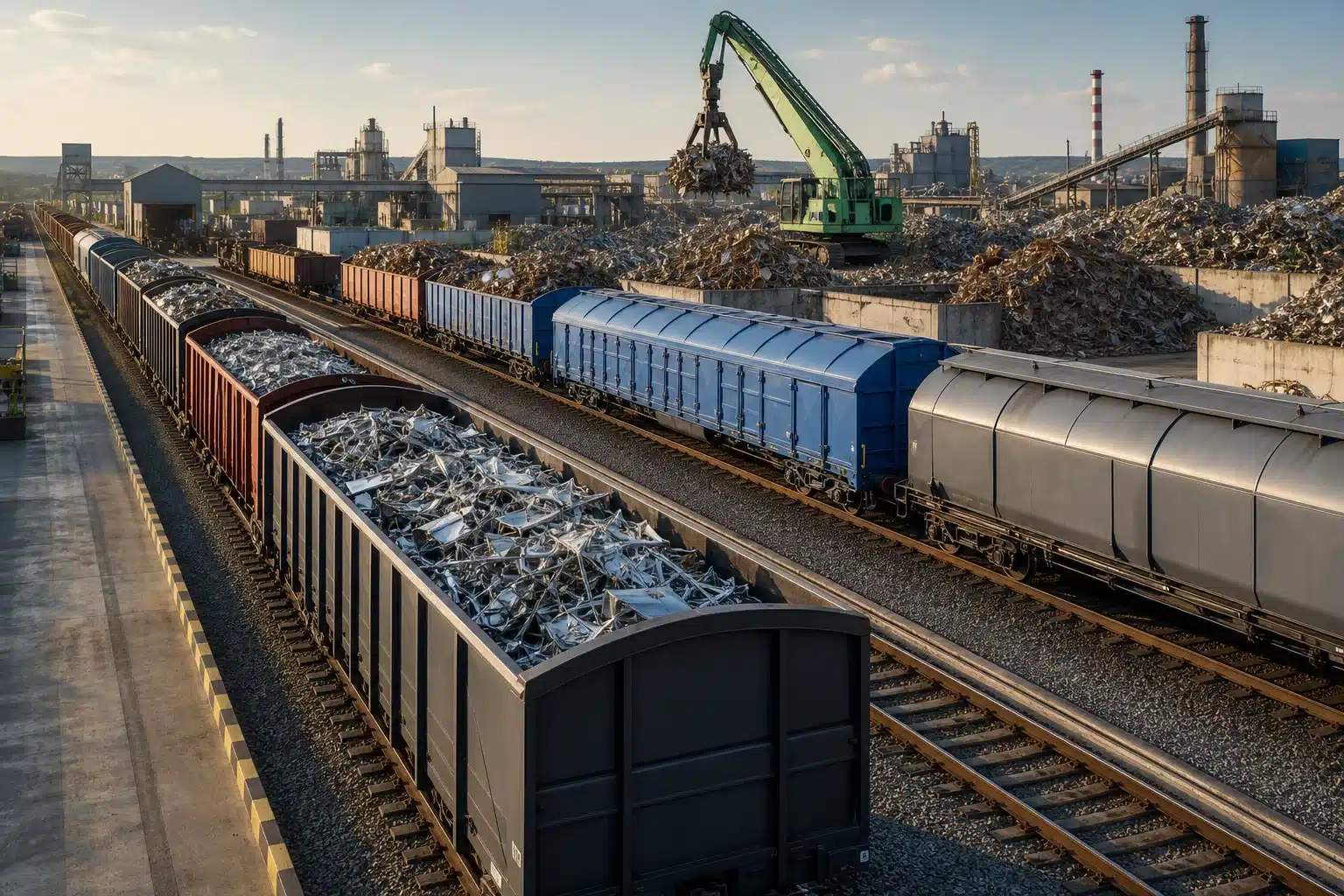
By contrast, Rail Cargo Group has explained that open E-type wagons can be suitable for steel, scrap metal and wood. This does not mean every open wagon carries every material, or that every scrap consignment is suitable for rail. It means the wagon category can be used for certain bulk loads where the material, loading plan and route conditions are appropriate.
Open Ea wagons have also been identified by Rail Cargo Group in a separate recycling collaboration as equipment used to move scrap iron and other recyclable metals. That is a more direct example of rail freight serving a recycling flow. Even then, it describes a particular industrial arrangement, not a rule that applies to all recycling businesses or every region.
Load security matters because metal can shift, protrude or create uneven weight distribution if it is not prepared correctly. Operators and customers need to consider how a load is placed, whether loose pieces can be contained, and what lifting or unloading facilities exist at each end. These are operational matters, not simply choices between rail, road or storage.
Wagon type can therefore be a helpful clue when reading a logistics announcement, but it is not complete evidence on its own. Readers should look for the material explicitly named by the operator, the type of wagon, the business partner involved and the route or industrial use described. Without those details, it is easy to turn a general freight story into an unsupported claim about recycling.
This is why rail logistics for metal recycling should be discussed with care. A coil-wagon fleet can support steel production and distribution, while an open-wagon operation may support a bulk recycling movement. Both sit within the wider metals economy, but they carry different goods and can perform different roles.
Steel coils and scrap metal are different loads
Steel coils and strip are manufactured metal products. They have passed through a production process and are being moved for further processing, fabrication or use. Their identity, dimensions and destination can be known before loading, which allows a planned transport arrangement using equipment designed for that form of product.
Scrap metal is material set aside for recovery, sorting and recycling. It may arise from manufacturing offcuts, building refurbishments, demolition work, vehicle dismantling, engineering workshops, retail clearances, household projects or commercial maintenance. Its condition and composition can vary widely, including clean single-grade metal, insulated cable, mixed loads and material attached to non-metal components.
Ferrous metals, such as iron and many forms of steel, are commonly separated from non-ferrous metals. Non-ferrous categories can include copper, aluminium, brass, lead and stainless steel. Different grades and conditions can affect how a processor identifies, handles and values material. Separation is useful because it gives a clearer picture of what is present and can reduce unnecessary handling later in the chain.
The difference is not merely technical. A report about coil traffic speaks to the movement of a finished or semi-finished industrial product. A report about scrap traffic speaks to the recovery side of the metal recycling supply chain. They can be linked through the broader circular economy, but one does not automatically predict changes in the other.
For example, a business may generate clean production offcuts that are collected, consolidated and sent to a processor. A construction site may have structural steel, cable, fittings and mixed metal from a strip-out. A householder may have a small quantity of old metal items. These loads may all enter recycling, but their collection method, storage, sorting needs and onward transport can be quite different.
It is also unsafe to assume that a freight announcement changes local prices. Scrap values move with grade, weight, condition and current market demand. A source that discusses wagon availability without reporting a relevant UK transaction, a local processor’s buying position or a published market assessment does not establish a London price trend.
Customers seeking current guidance can review the scrap metal prices information available from Premier Scrap Trading Ltd, then confirm the material and circumstances directly. Prices and eligibility should be checked at the point of arranging a collection rather than inferred from a rail article about steel coils.
Where rail can fit into the metal recycling supply chain
Rail can form one part of a larger industrial recycling route. A typical route may involve collection, local consolidation, sorting, processing, storage, onward freight and use by a manufacturer or metal processor. Not every consignment follows every stage in the same way, and the transport choice can depend on volume, geography, available facilities and contractual arrangements.
Rail Cargo Group’s collaboration with Loacker Recycling gives a specific example of recyclable materials moving by rail. The company describes the use of open Ea wagons for scrap iron and metals. This supports the limited but useful point that rail freight can be used in some industrial recycling flows when the material and infrastructure suit that approach.
It does not demonstrate that rail is the collection method for a house clearance, a tradesperson’s van load or a small building project. In Greater London, collection vehicles are often the practical first link between the material holder and a recycling route. A collection team can assess access, help establish the material mix and move the load from the property or worksite to the next appropriate stage.
After collection, material may be sorted by type and condition. Some loads may be consolidated with other compatible material before onward movement. Larger industrial flows can have different transport options from small local collections. The choice can change by location, tonnage, handling equipment and the needs of the receiving facility.
That distinction is valuable for businesses planning clearances. A rail-based downstream movement may be part of an operator’s wider network without changing what a customer needs to do at the front end. The customer still benefits most from clear material information, sensible separation, safe access and an agreed collection arrangement.
There is no verified direct connection between the 500 Shimmns wagons and scrap metal collection in London. There is also no stated connection to Premier Scrap Trading Ltd. The responsible interpretation is that the announcement offers industry context only: it shows how specialist wagon availability can support a particular steel freight flow in Europe.
Rail logistics for metal recycling is therefore best understood as a chain rather than a single service. Rail may be appropriate on some long-distance or high-volume industrial legs. Road collection, consolidation yards, processors and end users each have their own roles. A good explanation identifies those roles rather than implying that one rail announcement controls the whole recycling system.
What this means for Greater London customers
For people arranging a domestic, trade or commercial clearance, the immediate task is not to interpret a European fleet announcement. It is to identify the metal, estimate the amount, explain the site conditions and confirm what can be collected. Those details are more useful for planning than broad assumptions about freight capacity elsewhere in Europe.
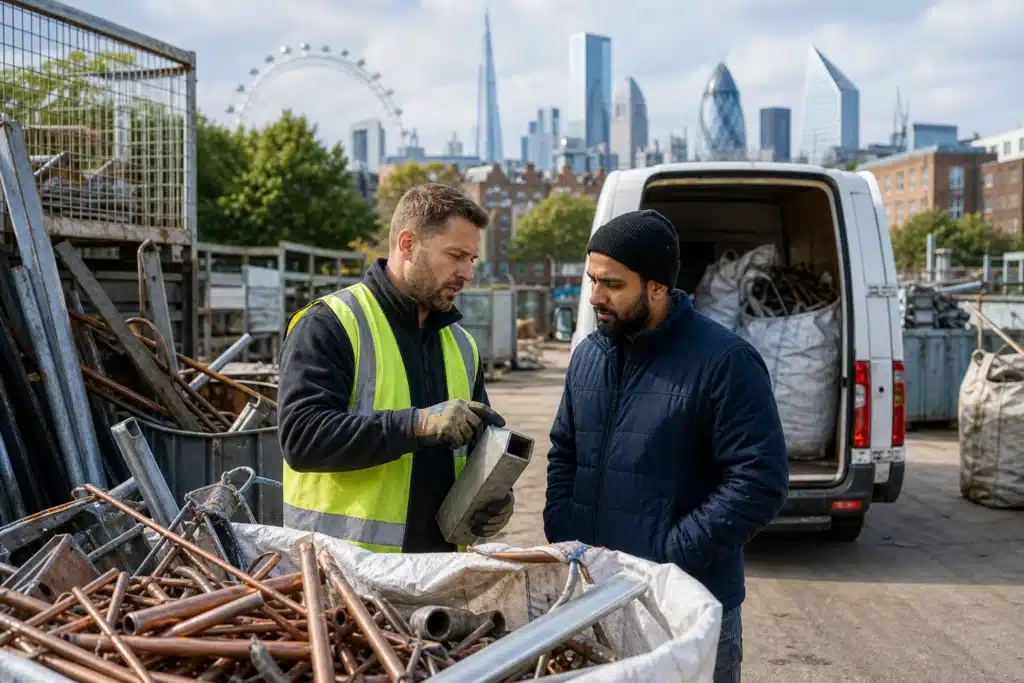
Premier Scrap Trading Ltd provides mobile scrap metal collection across Greater London for householders, landlords, tradespeople, workshops, offices, shops, construction sites and commercial or industrial properties. Service-area coverage was checked on 4 August 2026. The business can discuss the material before collection, which is particularly helpful for mixed loads or items that are difficult to identify.
For construction and commercial clearances, describe whether the material is loose, bundled, fixed in place, upstairs, behind restricted access or mixed with other waste. Mention any site rules, loading restrictions and available parking or vehicle access.
A clear description helps establish whether the proposed collection arrangement is practical and what preparation may be needed.
Where practical, keep copper, aluminium, brass, lead, cable, car batteries and stainless steel apart from mixed ferrous material. That does not promise a particular outcome or value, but it can make identification more straightforward. Grade, contamination, condition, weight and current demand all matter when considering whether material has resale value.
Do not treat the steel-coil wagon story as a signal to delay or accelerate a collection in expectation of a particular price movement. The evidence does not support that conclusion. Local conditions and the actual material remain more relevant than an announcement about retained specialist wagons for Austrian and European steel customers.
Customers who need a practical overview of coverage can use the Greater London areas page. Availability and operating arrangements should be confirmed when booking; coverage information was checked on 4 August 2026 and should not be read as a promise of a particular time slot.
The useful local message is simple: rail freight can matter in the wider metals supply chain, but a local collection decision should be based on the material in front of you. Accurate descriptions, safe preparation and a direct conversation are the soundest route to a suitable arrangement.
Preparing scrap for collection and recycling
Preparing metal sensibly can help a collection proceed more smoothly and can make the material easier to identify. Start by separating obvious categories where this can be done safely. Keep non-ferrous metals away from general mixed steel where possible, and set aside cable and car batteries for clear identification.
- Keep metal free from general rubbish, timber, soil and other avoidable contamination where practical.
- Place loose, sharp or awkward pieces so that they are less likely to move or cause injury.
- Describe mixed loads honestly, including attached plastics, insulation, fittings or non-metal parts.
- Do not dismantle equipment if doing so would create a safety risk or leave hazardous parts exposed.
- Confirm unusual, hazardous or mixed items before assuming they can be collected.
Old washing machines and fridges are not accepted by Premier Scrap Trading Ltd. This is important when planning a property clearance because appliances should not be treated as interchangeable with ordinary metal items. If an item is unusual or partly dismantled, ask before booking rather than relying on a general description.
On-site weighing can help establish the quantity of material collected. Where material has resale value and is eligible, payment is made by bank transfer after weighing. This approach gives a traceable record, while recognising that not every item or load has resale value. The final position depends on the material and the circumstances of the collection.
For regular trade or site work, it is useful to create a simple routine: designate a safe area for metal, keep categories distinct where feasible, prevent avoidable mixing with general waste, and record any changes in the material stream. This can be particularly helpful after strip-outs, maintenance work or phased refurbishment projects.
Safe preparation does not require a customer to become a logistics specialist. The aim is simply to make the collection conversation accurate. Tell the collector what the material is believed to be, how it is stored and whether there are access constraints. That information is more useful than trying to infer acceptance from a distant freight story.
For further practical answers, see the Premier Scrap Trading Ltd FAQ. If there is any uncertainty about a material, contact the business before moving, cutting or stacking it. This is especially sensible where a load is mixed, unusually heavy or connected to a wider clearance.
Questions to ask when following metals logistics news
Metals logistics headlines can be informative, but they often need closer reading. A short set of questions can help distinguish a verified operational development from an assumption about recycling, pricing or local collection.
- Has equipment been added or retained? An extension, lease renewal or retained fleet can preserve capacity without increasing it.
- What does the source explicitly say is being carried? Look for terms such as coils, strip, scrap iron, recyclable metals or a named commodity.
- What wagon type is identified? Specialist coil equipment and open bulk wagons can serve different loads.
- Who is the customer or partner? A steel producer, recycling company or logistics provider can indicate the relevant part of the supply chain.
- Is there a stated route or market? A European industrial route does not automatically apply to the United Kingdom or Greater London.
- Are price, timing or environmental claims actually supported? If the source does not provide evidence, they should not be added as conclusions.
These questions are useful because metal recycling news can combine several related subjects: steelmaking, freight, waste management, recovered materials and commodity markets. The subjects overlap, but they are not identical. A transport story may be significant to an operator while having no demonstrated effect on a local collector or a customer’s particular load.
Publication date matters too. The ERR partnership report is dated 2025, while the open-wagon explanation was published in 2023 and the Loacker Recycling report in 2025. Each provides context for a stated activity at that time. None should be stretched beyond its wording to create an unsupported 2026 claim about local operating conditions.
When a report makes a large numerical claim, identify what the number measures. It may refer to wagon count, route capacity, contract duration, tonnes moved, customers served or investment value. Those are different measures. Here, the supported number is 500 Shimmns wagons retained under an extended partnership for coil transport.
This approach also supports clearer conversations with customers. Rather than saying that “rail is expanding for scrap”, it is more accurate to say that rail can be used for certain recycling flows, while this particular announcement concerns retained steel-coil wagons. Precision is useful, practical and more trustworthy.
Reliable sources and a practical next step
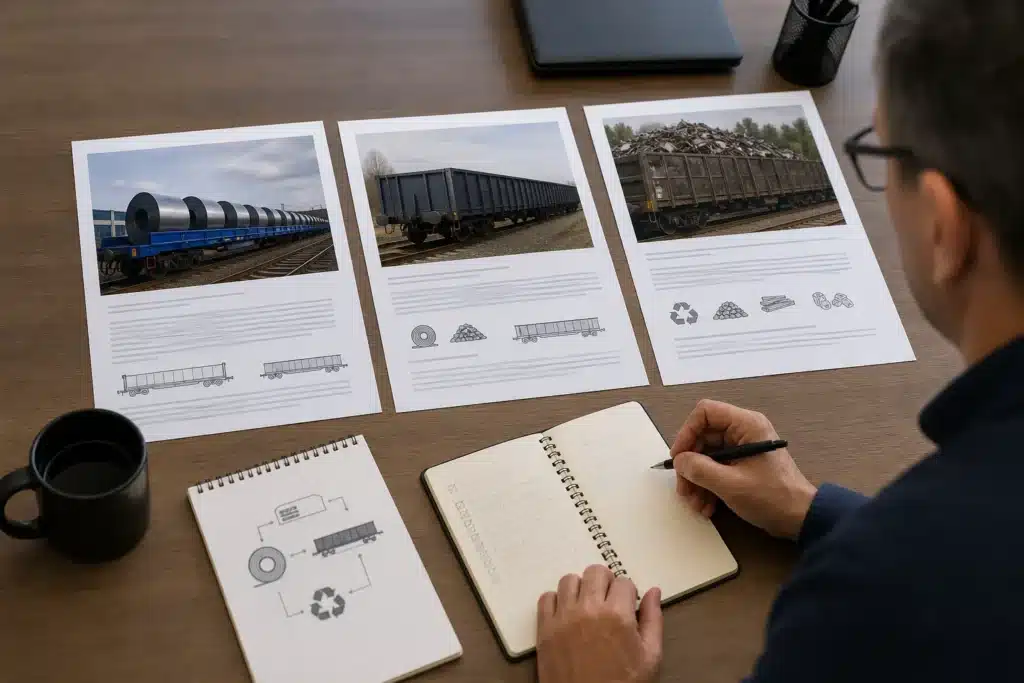
The most dependable way to follow this story is to read the original Rail Cargo Group material. Its report on the ERR partnership explains the 500 Shimmns wagon arrangement and its coil-transport purpose. Its open-wagon article explains that E-type wagons can be used for loads including steel and scrap metal. Its Loacker Recycling report provides the separate example of open Ea wagons moving scrap iron and other recyclable metals.
Together, those sources support a balanced conclusion. Steel-coil transport and scrap transport can both sit within the broader metals economy, but they should not be treated as the same activity. The 500-wagon report is about continuity for a specialist steel-coil fleet, while the Loacker example is the more relevant evidence that rail can be used in a recycling flow.
For local customers, the useful next step is to focus on the actual materials and the collection site. Premier Scrap Trading Ltd can discuss scrap metal collection in London across Greater London, confirm whether the material can be collected and provide current guidance based on the load. Coverage and operating arrangements were checked on 4 August 2026.
If you have copper, aluminium, lead, brass, cable, car batteries, stainless steel or mixed metal from a home, trade or commercial project, provide a clear description and ask about preparation. This is more actionable than using a rail fleet announcement as a proxy for local collection arrangements or values.
Call 07931 361 034 or book a collection online with Premier Scrap Trading Ltd to discuss your scrap metal, confirm materials and ask for current prices.
Related London scrap services
Frequently asked questions
Did ÖBB Rail Cargo Group add 500 wagons for scrap metal?
No. The verified report describes an extended arrangement retaining 500 Shimmns wagons for steel coils and metal strip, not a new scrap-metal fleet.
What are steel coil wagons used for?
Steel coil wagons are designed to carry coiled steel and related strip products securely between industrial locations.
Can rail be used to move scrap metal?
Yes. Rail can be used for some industrial scrap and recyclable-metal flows where the load, wagon type and facilities are suitable.
Do steel-coil wagon announcements affect London scrap prices?
What metals should be separated before collection?
Are old washing machines and fridges accepted?
How are eligible scrap-metal payments made?
How can I arrange scrap metal collection in Greater London?
Call 07931 361 034 or book online to confirm the materials, site access and current collection arrangements.