


The UK steel strategy 2026 matters to London customers because it puts greater emphasis on a resilient supply of high-quality steel scrap as the industry moves towards electric arc furnace production. For a householder clearing a garage, a contractor managing offcuts or a workshop separating metals, the immediate practical lesson is simple: keep different metals apart where it is safe and sensible to do so.
Sorting does not turn an ordinary load into certified steelmaking feedstock, and it does not guarantee a value.
It can, however, make material easier to identify, weigh and direct into clearer recycling streams. Premier Scrap Trading Ltd provides scrap metal collection in London across Greater London, but the material, access arrangements, eligibility and current value should be confirmed before a collection is arranged. Old washing machines and fridges are not accepted.
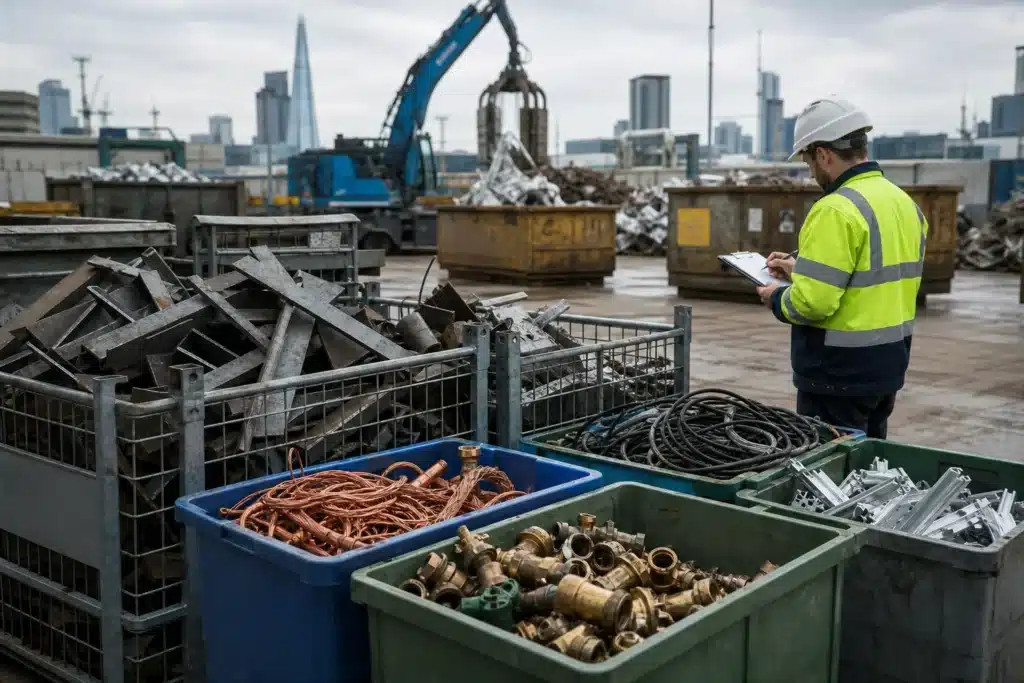
Why sorted scrap matters beyond the collection
A mixed pile of metal can contain steel, iron, copper, brass, aluminium, cable, stainless steel and non-metal attachments. These materials behave differently in recycling and can have different grades and market uses. When they are all mixed together, identifying what is present may take longer and some materials may be less straightforward to assess.
For most customers, good preparation means practical separation rather than technical testing. Put obvious steel and iron together, keep copper and brass separate, and avoid adding loose cable or aluminium to a steel pile. Labelled tubs, stillages or separate areas of a site can help where quantities are large enough to justify it. Do not take risks to strip, cut or dismantle items merely to sort them.
The national policy context is wider than an individual collection. The UK’s future steelmaking needs depend on industrial investment, sorting, processing, technology and supply-chain decisions. A local collector does not decide whether a particular item becomes a particular grade of steel. Yet clear material streams begin with sensible handling at homes, properties, workshops and sites.
What is the UK steel strategy 2026?
The published UK steel strategy 2026 is a national government strategy, not a London collection scheme or a price list. The web version was updated on 20 March 2026. It sets out the government’s view of the challenges and opportunities facing UK steel, including the transition away from traditional blast-furnace production as existing assets reach the end of their operational life.
The strategy describes electric arc furnace technology as the most viable route for future production in that context. It also identifies a resilient, cost-effective and high-quality scrap steel supply chain as strategically important. That is significant because electric arc furnaces can use recycled steel scrap alongside other iron-bearing inputs.
It is important not to read more into the policy than it says. The strategy does not measure demand in individual London boroughs, promise that every collected item can enter a high-grade steel route or set a collection price. Nor does it establish a direct relationship between Premier Scrap Trading Ltd and any steelmaker. It provides national context for why better material quality and improved processing are becoming more important topics.
For customers in Greater London, the useful response is to plan a clear collection rather than trying to interpret national forecasts as a local guarantee. Describe the material accurately, separate obvious categories, make access clear and ask what can be accepted. This helps set realistic expectations before a vehicle is sent.
Why electric arc furnaces need high-quality scrap
An electric arc furnace uses electrical energy to melt scrap steel and other suitable iron-bearing materials. This differs from the traditional blast-furnace route, which relies on different inputs and processes. The shift does not make every piece of scrap identical: the composition and condition of material still matter, particularly when steelmakers are making products with tight specifications.
Government material uses the term low-residual scrap for scrap with lower levels of unwanted elements. In plain language, residual elements are substances already present in the material that can be difficult to manage when recycled metal is melted and made into new products. The 2025 steel strategy consultation identifies copper as an example: some high-quality steel products have a lower tolerance for residual elements, especially copper.
This is why high-quality steel scrap is not simply a matter of whether metal looks clean or whether it is magnetic. It can involve its origin, grade, composition, contamination, size, processing history and the requirements of the eventual user. Government says improved processing is needed to remove residual elements, while innovation and investment are part of the wider challenge.
Source separation is helpful, but it has limits. Keeping copper pipe, brass fittings, aluminium sections and cable away from steel can create clearer starting streams. It does not remove copper from within a steel item, prove its chemistry or certify it as low-residual material. Customers should therefore regard sorting as a sensible preparation step, not a technical quality assurance process.
The same principle applies to mixed demolition loads. A contractor can reduce obvious cross-contamination by using separate containers or piles, but specialist downstream processes may still be needed. Careful collection preparation supports identification and recycling; it does not replace industrial sorting or testing.
What the strategy says about future scrap demand
The UK steel strategy 2026 gives a national picture of the scale of the opportunity. It says the UK produces around 10 to 11 million tonnes of steel scrap each year and currently uses about 2.2 million tonnes. It also presents a projection that demand could reach 6.7 million tonnes by 2040 as electric arc furnace capacity develops.
These are UK-wide figures and forecasts. They should not be treated as a measurement of scrap arising in London, a prediction of a particular customer’s value or a promise that demand will rise evenly across every metal category. Market conditions can move in different directions according to grade, demand, transport, processing capacity and wider economic conditions.
The strategy also cites an estimate that demand for high-quality, low-residual scrap could increase by seven to eight times as new electric arc furnaces come online. The key word is quality. The potential increase concerns a more specific type of supply needed for certain applications, not all ferrous material in every condition.
That distinction matters when planning a clear-out. Structural steel offcuts, radiators, fixtures, machinery components and mixed household metal may all contain recoverable metal, but their suitability and value are assessed according to their actual material and condition. No one should assume that every item belongs in a high-grade steel stream.
For London businesses, the policy direction is a reason to take material segregation seriously over time. It is not a reason to delay a needed clearance in the hope of a particular future rate. Check current guidance when you are ready to book, and treat any figure as relevant only to the material offered and the market at that time.
A practical sorting guide for London collections
Safe, straightforward separation can make a collection easier to discuss and can help avoid obvious mixing of ferrous and non-ferrous metals. Start with what you can identify confidently. If an item is unfamiliar, electrical, pressurised, damaged or potentially hazardous, leave it intact and ask for guidance rather than attempting to dismantle it.
- Make a steel and iron area: keep obvious ferrous items, such as suitable steel offcuts and iron fixtures, together.
- Separate non-ferrous metals: use different containers or piles for copper, brass, aluminium, lead, stainless steel and cable where practical.
- Keep cable apart: do not mix loose cable through a steel load. State whether it is insulated, mixed or has visible attachments when making an enquiry.
- Remove simple attachments only when safe: loose packaging or easily detached non-metal parts may be separated without cutting into unknown equipment or creating a hazard.
- Do not dismantle risky items: avoid opening electrical equipment, cutting sealed containers or handling items that may contain fluids, pressure or hazardous components.
- Photograph and describe unusual loads: clear information helps establish whether collection may be possible and what access or handling will be needed.
For domestic customers, the easiest method may be a few clearly labelled boxes rather than one large mixed bag. For building work, it may mean designating separate bays for steel, cable and plumbing metals. In a workshop, regular segregation of offcuts can prevent a valuable non-ferrous material from becoming lost in a general ferrous load.
Premier Scrap Trading Ltd can discuss materials before booking. For an overview of the service and practical recycling information, see scrap recycling in London. Availability depends on the material offered, the location, access and collection requirements, all checked on 3 August 2026.
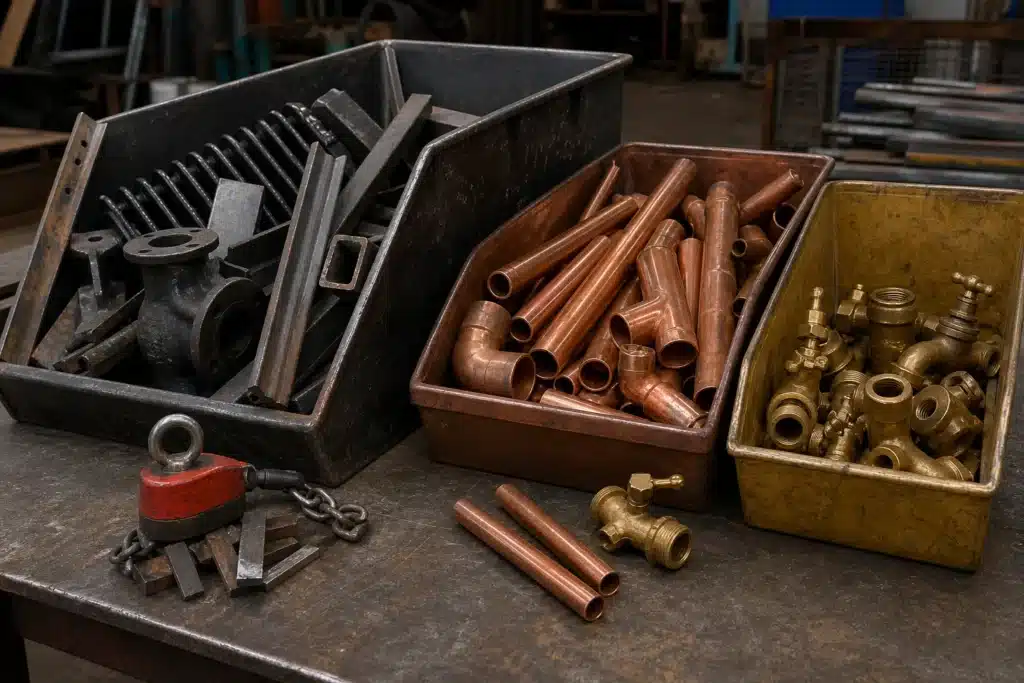
Ferrous and non-ferrous metals: what to keep apart
Ferrous metals contain iron and are commonly magnetic, although a magnet is only a rough sorting aid. Non-ferrous metals include several categories that are often easier to manage when kept separate. The table below is a preparation guide, not an acceptance list or a valuation.
Acceptance and value depend on grade, condition, weight and current market demand. Mixed or unusual material should be discussed before collection, particularly if it contains electronics, fluids, insulation, unknown components or difficult access constraints. Old washing machines and fridges are not accepted.
| Material group | Common examples | Why separation helps | What to do before collection |
|---|---|---|---|
| Steel and iron | Suitable structural offcuts, metal fixtures, radiators | Keeps ferrous material distinct from non-ferrous grades | Keep obvious steel and iron together; flag bulky or mixed items. |
| Copper | Pipe, tube, fittings and clean offcuts | Avoids mixing with steel or brass | Store separately and identify coatings or attachments where visible. |
| Brass | Taps, valves and plumbing fittings | Helps distinguish it from copper and mixed metals | Keep in a separate container if practical. |
| Aluminium | Frames, sheet, cast items and profiles | Prevents it being lost in a ferrous pile | Separate from steel and state if it is mixed with other materials. |
| Lead | Sheet, flashing and pipe | Supports clearer identification and safe handling | Keep apart and confirm the material before booking. |
| Stainless steel | Commercial fittings, catering items and offcuts | It can be confused with ordinary steel | Keep distinct where known; do not rely only on a magnet test. |
| Cable and car batteries | Insulated cable and vehicle batteries | They need clear identification and appropriate handling | Keep separate, avoid damage and confirm acceptance in advance. |
How sites, workshops and properties can prepare scrap
Construction sites often generate several metal streams at once: steel offcuts, cable, copper pipe, brass fittings, aluminium components and mixed demolition material. Where site procedures allow, separate these as the work progresses instead of waiting until the end. This can make the final clearance easier to describe and reduce the need to move the same material repeatedly.
Keep site safety first. Follow the site’s own rules for storage, manual handling, vehicle movements and restricted areas. Do not ask workers to strip unknown materials or carry oversized loads without appropriate equipment. A nominated contact can provide useful information about the quantity, location, loading route, parking restrictions and any induction or access requirement.
Workshops can benefit from simple, repeatable storage arrangements. Mark containers for steel, copper, brass, aluminium and cable; keep swarf or turnings according to existing safety procedures; and avoid allowing different grades to build up in one unlabelled container. The aim is not to make a technical declaration about every item, but to retain enough separation for a clear conversation about the load.
Landlords and householders should identify items before arranging a property clearance. Plumbing metals, shelving, bed frames, garden metal and certain fittings may be relevant, but appliances and mixed household goods should never be assumed to be accepted. Check first, especially where an item contains electrical parts, cooling equipment, batteries or unknown materials.
Businesses can prepare a short list of the material, approximate quantity, photographs where useful, the collection address and a named person who can meet the driver. Premier Scrap Trading Ltd offers scrap metal collection in London across Greater London, subject to confirmation of materials, eligibility and access. Review the stated area guidance at areas covered in Greater London; coverage information was checked on 3 August 2026.
Traceability, weighing and current scrap values
Sorting can help identification, but it does not create a fixed rate. Scrap values vary with grade, condition, weight and current market demand. Contamination, mixed materials, quantity, handling needs and access can also affect what is practical. National strategy forecasts should not be used to infer that a particular item will rise in value.
Premier Scrap Trading Ltd states that eligible materials are weighed and that eligible payments are made by bank transfer after weighing. A printed receipt is part of the stated service offering where applicable. This gives customers a clearer record of the collection process without suggesting that every load has resale value or that a price can be guaranteed in advance.
For current category guidance, use the scrap metal prices page and check again when arranging collection. Information on the page and market conditions should be treated as time-sensitive, checked on 3 August 2026. A discussion of the actual material remains necessary before any collection is confirmed.
Clear descriptions also support traceability. Tell the collector where material came from when relevant, whether it is from a renovation, workshop, tenancy change or construction work, and whether access is straightforward. This is practical information, not a request for customers to make technical claims about metal quality. It helps everyone plan the collection responsibly.
What the UK steel strategy 2026 means for metal recycling in London
The UK steel strategy 2026 reinforces a broad point: the UK will need stronger systems for obtaining and processing high-quality steel scrap if electric arc furnace production expands as anticipated. Government identifies the need for innovation, investment and a sustainable domestic supply of better-quality material. That is an industrial challenge that extends well beyond any individual collection.
For metal recycling London customers, the most useful contribution is proportionate and practical. Separate obvious material groups, avoid contaminating a steel load with loose non-ferrous items, keep items safe to handle and provide accurate information. These steps can support clearer material streams and more straightforward identification.
They should not be confused with a guarantee about where material will ultimately go. Premier Scrap Trading Ltd does not claim to operate a processing plant, supply domestic steelworks or determine final end markets. Recycling routes depend on the material and downstream arrangements. The national strategy is policy context; the local service is collection and recycling support subject to confirmation.
The wider value of careful segregation is that it preserves options. Copper, brass, aluminium, lead, stainless steel, cable and ferrous metal can be assessed as recognisable categories instead of becoming an undifferentiated mixed load. That is useful for customers managing a one-off clear-out and for organisations building regular material-handling routines.
For further local guidance, read metal recycling London information. The government’s national strategy and earlier consultation provide the policy evidence behind the discussion of electric arc furnaces and low-residual scrap.
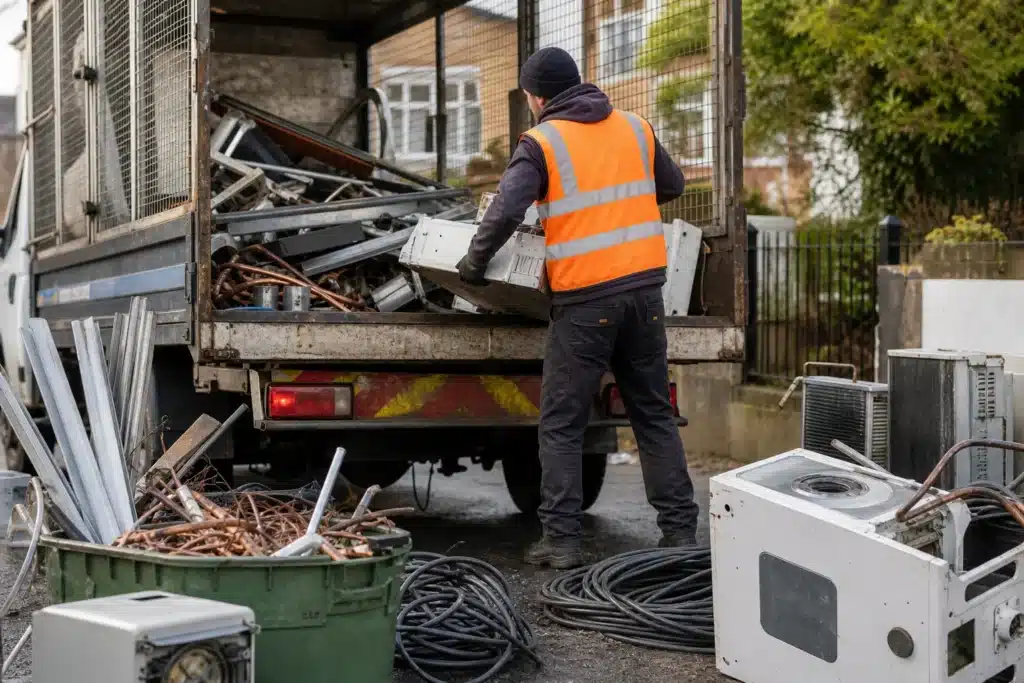
Arrange a scrap metal collection in Greater London
In summary, the UK steel strategy 2026 explains why high-quality scrap supply is increasingly important to the future of UK steelmaking. For local customers, the practical takeaway is not to make assumptions about steel grades or prices. It is to prepare safely, keep clear materials apart where possible and confirm the details of a collection before booking.
Premier Scrap Trading Ltd serves householders, landlords, tradespeople, workshops, construction sites and businesses across Greater London. Before arranging a visit, confirm the material, quantity, access, eligibility and current value. This is particularly important for mixed loads, unusual items, cables, batteries, electrical equipment and anything that may need special handling. Old washing machines and fridges are not accepted.
For common collection questions, visit the scrap collection FAQ.
Call 07931 361 034 or book a collection online with Premier Scrap Trading Ltd to discuss your scrap metal, confirm what can be collected and ask for current prices.
Related London scrap services
Frequently asked questions
What is the UK steel strategy 2026?
It is the UK government’s national strategy for the steel sector, updated on 20 March 2026, covering issues including the move towards electric arc furnace production and the need for high-quality scrap supply.
Why does high-quality steel scrap matter for electric arc furnaces?
Electric arc furnaces can use recycled steel scrap, but some steel products need material with lower levels of unwanted residual elements, so scrap quality and processing matter.
Does separating scrap metal increase its value?
Separation can make materials easier to identify and weigh, but value still depends on grade, condition, weight and current market demand.
Can copper cable be put in with steel scrap?
It is better to keep cable separate from steel where practical, then confirm the material and collection eligibility before booking.
Do national steel forecasts guarantee higher London scrap prices?
No. National policy and demand projections do not guarantee local prices, which can change with material grade, condition, weight and market conditions.
Can every metal item be collected?
No. Materials, condition, access and eligibility need to be confirmed in advance, especially for unusual, mixed, electrical or potentially hazardous items. Old washing machines and fridges are not accepted.
What information should a construction site provide before collection?
Provide the material types, approximate quantity, photographs if useful, site address, loading access, parking restrictions and a named contact who can confirm arrangements.
How do I arrange scrap metal collection in Greater London?
Call 07931 361 034 or book online with Premier Scrap Trading Ltd to confirm the materials, access requirements, eligibility and current prices.