


If you are looking up the copper price London customers may receive in 2026, start with the material rather than a headline figure. There is no one rate that applies to pipe, wire, cable, fittings and mixed renovation offcuts alike. Grade, cleanliness, weight, quantity, access and prevailing market conditions can all influence an assessment.
For householders, landlords, tradespeople and businesses, the useful first step is simple: keep copper separate where practical, describe what you have accurately and ask for a current assessment close to collection. This approach is safer and more informative than relying on an old quotation or treating an online indication as a future commitment.
This guide explains common scrap copper grades, safe preparation, weighing and traceable settlement. It also puts wider UK demand information in perspective. National demand signals can explain why copper matters to industry, but they do not determine the outcome for a particular collection in Greater London.
What affects the copper price London customers are quoted?
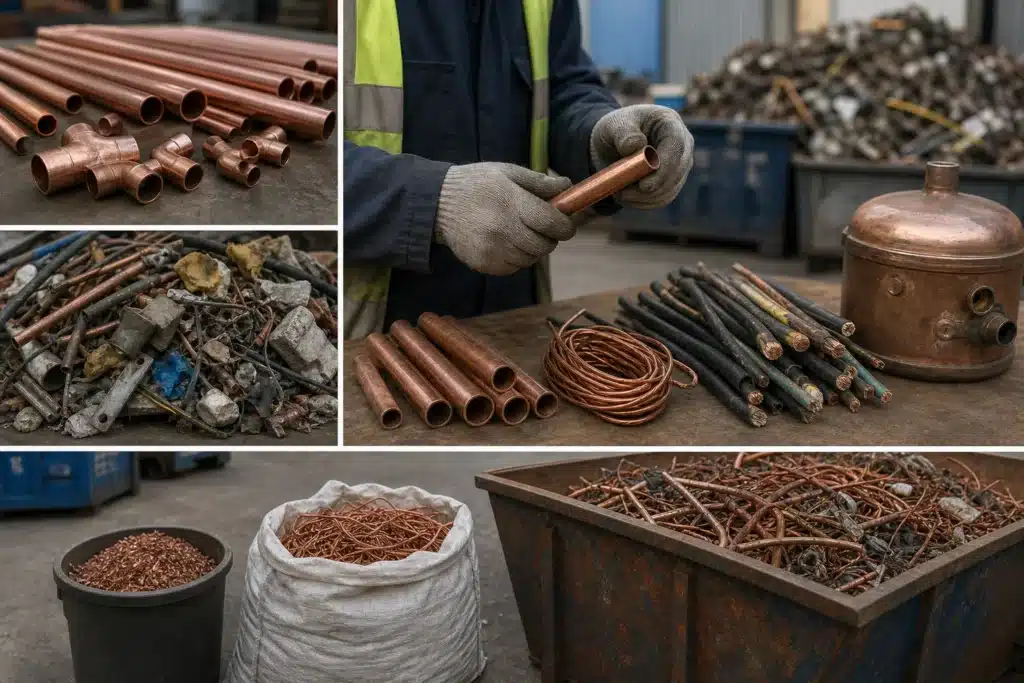
A copper price London enquiry is an assessment of actual material, not merely a label. Clean pipe presented separately is easier to identify than a mixed pile containing fittings, insulation, steel brackets, plastic, rubble and general waste. The difference affects how readily the material can be sorted and processed, and may affect the category discussed.
Grade is central. Bare wire, tube with few attachments, cable with insulation still in place and copper-containing tanks are different materials for assessment purposes. Paint, solder, valves, clips, coatings and other attached materials can also matter. A reddish surface colour is a useful clue, but it does not settle the grade of a complex or mixed item.
Weight and quantity matter because a small bag of offcuts and a substantial site clearance may need different handling and loading arrangements. Collection practicality also matters. Material stored behind a locked gate, upstairs, among building debris or in a busy managed property needs more planning than a clear, accessible pile at ground level.
Market conditions can change over time. International trading, processing requirements, transport and demand for recovered materials can all form part of the wider context. Therefore, a prior copper price London quotation or a published range should be regarded as background information, not an amount that applies automatically on a later date.
Premier Scrap Trading Ltd provides category information on its scrap metal prices page. Use it to understand the kinds of material commonly discussed, then contact the team about the load you actually have. The condition and quantity presented still need to be considered at the time of collection.
Why grade is more useful than a headline figure
Two people can both describe their material as copper while having very different loads. One may have bare wire with no insulation or attachments. Another may have painted pipe, brass valves, soldered joints and steel clips. Both loads contain copper, but they do not require the same sorting and recovery work.
That is why it is more helpful to ask about the likely grade than to seek one universal copper price London answer. Where practical, take clear photographs, say whether the material is pipe, cable, a cylinder or mixed offcuts, and provide an approximate quantity. This gives a collector a clearer starting point while allowing the final assessment to reflect inspection and weighing.
How to identify common scrap copper grades
Common grade names are practical descriptions, not promises that a particular category will apply to each piece. They help you separate familiar material before collection and communicate clearly. If an object might be brass, bronze, aluminium or a mixed assembly, describe the uncertainty rather than trying to force it into a category.
Bright, clean copper wire
Bright wire commonly means bare copper wire that is free from insulation, obvious coatings and attachments. It is often reddish-orange, although age and oxidation may darken the surface. Suitable wire can arise from electrical work or carefully separated offcuts. Its appearance alone is not a reason to take risks with stripping or dismantling.
Leave insulation in place if removing it would create a hazard. Cable should never be burnt to expose metal: burning creates fumes, a fire risk and residue that can complicate later handling. Keep insulated cable together and identify it accurately when you enquire.
Clean copper tube
Clean tube generally describes copper pipe that is largely free from non-copper attachments. It may come from plumbing or heating work and can still carry traces of paint or solder. Fittings at joints, valves and brackets are common. Where an attachment is easy and safe to separate, doing so can make the material easier to describe.
There is no need to force apart difficult fittings, use dangerous tools or damage property to improve a pile. Leaving a complex connection intact and explaining what is attached is a sensible option.
Mixed copper
Mixed copper is a useful plain-language description for pieces with solder, paint, varied shapes, light attachments or visible contamination. Renovation, plumbing and repair work often produces this type of material. Keep it apart from cleaner pipe and bare wire so it can be considered as its own group.
Copper cylinders
Older hot-water cylinders may contain copper, but their construction varies. They can include insulation, taps, pipework, foam and other components. Explain the approximate size, whether the unit is disconnected and how it can be accessed. Do not cut or dismantle a connected, pressurised or uncertain system yourself.
Insulated copper cable
Insulated cable contains metal beneath plastic or rubber covering. Copper content and construction vary considerably, so it is not assessed in the same way as bare wire. Keep it separate from loose copper, avoid mixing it with general waste and say whether it is domestic wiring, thicker trade offcuts or a mixed cable load. Unusual cable from specialist equipment should be checked before collection.
Scrap copper grades at a glance
This table is an identification and preparation guide. It is not a price list, an acceptance list or a commitment that a named category applies. The condition of material should be confirmed when collection is discussed and when it is weighed.
| Material | Typical appearance | Common contaminants | Safe preparation |
|---|---|---|---|
| Bright copper wire | Bare reddish-orange wire | Insulation, clips, plugs and coatings | Keep dry and separate; leave insulation intact if removal is unsafe. |
| Clean copper tube | Pipe from plumbing or heating work | Paint, solder, valves and steel brackets | Remove only straightforward attachments where safe. |
| Mixed copper | Offcuts, joints and varied pieces | Fittings, paint, solder and non-metal debris | Keep apart from cleaner copper groups. |
| Copper cylinder | Large water-system vessel or tank | Insulation, taps, foam and pipework | Ensure it is disconnected; explain its size and access. |
| Insulated cable | Wire within plastic or rubber covering | Plugs, mixed metals and unrelated waste | Bundle separately and do not use unsafe stripping methods. |
Storage conditions can alter how material looks. Outdoor weathering, dust from demolition and surface dirt do not reveal the full composition of an item. Clear sorting and an honest description are more useful than attempts to make material appear cleaner or higher grade than it is.

Copper, brass and cable: sort materials before weighing
Sorting is one of the most effective ways to make a copper price London assessment clearer. Place loose copper in one container or pile, insulated cable in another, and separate visible brass, aluminium, lead and steel where that is practical. This helps identify the contents and supports straightforward weighing.
Brass is frequently found in taps, valves, connectors and plumbing fittings. It often has a yellow-gold appearance compared with copper’s redder tone. Bronze can resemble brass, and coatings can make visual identification less certain. Colour is therefore only a starting point, not proof of a specific alloy.
Ferrous metal, including many steel brackets, screws and frames, differs from non-ferrous material such as copper, brass and aluminium. A magnet can sometimes help with basic sorting because steel will usually be attracted to it. However, it cannot identify every alloy or establish the precise grade of a mixed item.
For wider guidance on separating materials, read the company’s guide to scrap recycling in London. Keep known groups apart, flag uncertain items and allow the material to be assessed rather than guessing.
Keep safety ahead of preparation
Do not burn, crush, saw or strip materials using methods that create fumes, sparks, sharp edges or electrical risk. Treat cable as potentially live until it has been safely disconnected by an appropriate person. If a fitting is difficult to remove, leave it attached and mention it when arranging collection.
Construction and refurbishment scrap can include dust, sealants, insulation, fluids and sharp fragments. Use suitable gloves, wear sturdy footwear and keep children away from the work area. If material appears contaminated, hazardous or connected to specialist equipment, seek confirmation before moving it or presenting it for collection.
A preparation checklist for copper collection
Preparation should make material visible, accessible and accurately described. It does not require you to dismantle everything or take risks over a small fitting. A well-organised collection area helps a householder, site manager or collector understand what is present.
- Separate copper, brass, cable, aluminium, lead and steel into different piles or containers where possible.
- Remove loose bags, cardboard, rubble and other non-metal waste only where it is safe to do so.
- Leave difficult, fixed or uncertain attachments in place and mention them during the enquiry.
- Keep gates, corridors, stairways and loading areas clear for safe access.
- State whether the material is at a home, workshop, office, shop, building site or industrial property.
- Give an approximate quantity and identify heavy, awkward or large items in advance.
- Keep relevant ownership, address and contact details available for the collection process.
- Ask about unusual, mixed or potentially hazardous material before booking.
Old washing machines and fridges are not accepted. Keep them separate from copper or mixed-metal material that you intend to discuss. This avoids confusion when clearing a property and allows the enquiry to focus on items that may be suitable for consideration.
Landlords and managing agents can assist by confirming the responsible contact, identifying where material is stored and checking whether parking, gates or concierge arrangements apply. Tradespeople can reduce later sorting by separating pipe offcuts and cable as work progresses instead of leaving one mixed pile at the end of a project.
For a copper price London conversation, photographs can be helpful where access or material type is not obvious. Include a view of the overall pile as well as close images of pipe, cable or fittings. A photograph does not replace inspection, but it can help establish whether further details are needed before a visit is arranged.
How weighing and traceable payment work
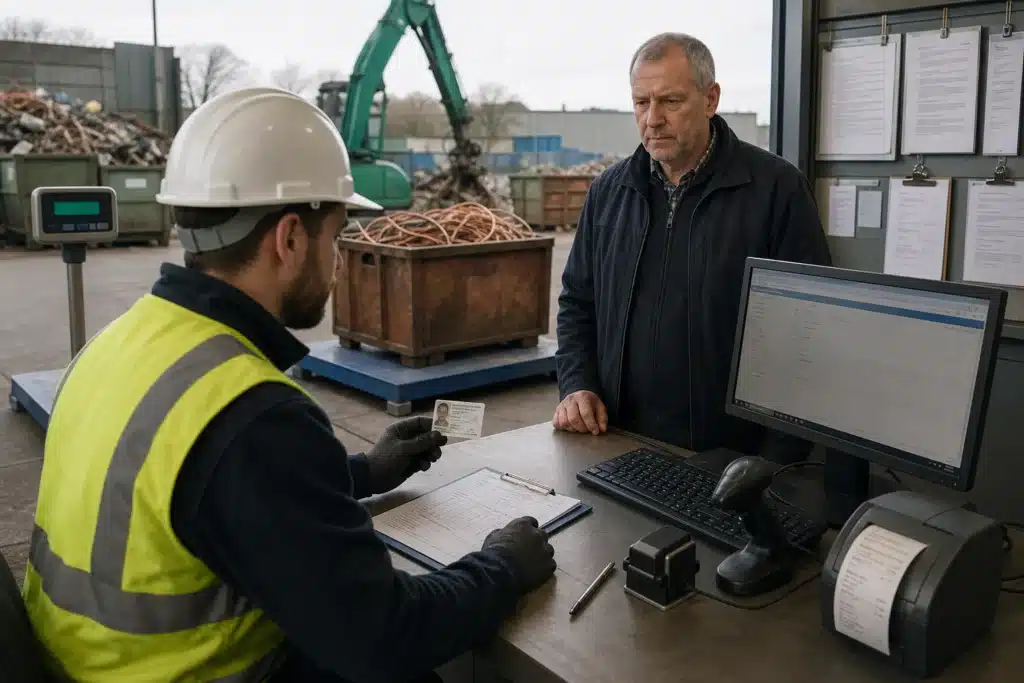
Weighing creates a practical record of the quantity presented and supports assessment by category. Premier Scrap Trading Ltd states that, where material has resale value and relevant checks are completed, eligible settlement is made by bank transfer after weighing, with a printed receipt. The outcome depends on the material presented and the current assessment.
Identity and address checks are part of the legal framework. Home Office supplementary guidance on the Scrap Metal Dealers Act explains that dealers must verify a supplier’s full name and address before receiving scrap metal from that person. The guidance permits electronic transfers and non-transferable cheques, providing a traceable route for settlement.
Read the official Scrap Metal Dealers Act supplementary guidance for the underlying requirements. It is particularly relevant to businesses, landlords and site managers arranging removal on behalf of an organisation and retaining records of material leaving premises.
Useful details for an enquiry
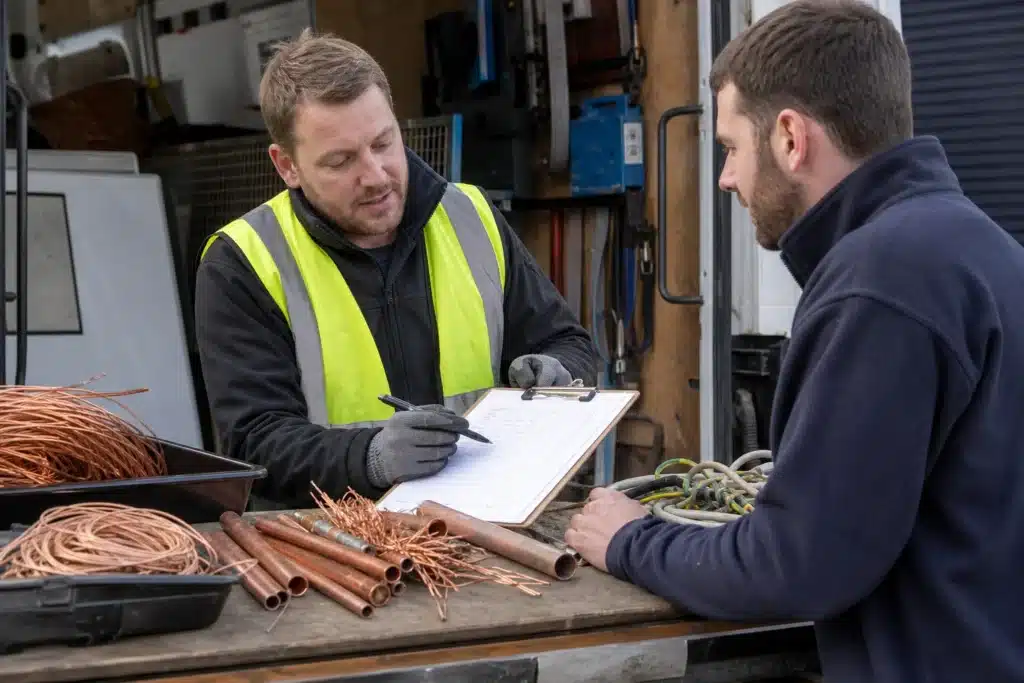
Provide the material type, approximate quantity, collection address, floor level, photographs where useful and any access restrictions. Mention whether an item is already disconnected, whether the load is mixed with other metals and whether help may be needed for heavy material.
These details help establish what may be suitable for collection and what needs further confirmation. They do not remove the need for an on-site assessment, weighing and required verification. Collection timing and material suitability should be agreed directly rather than assumed.
Why UK copper demand is worth watching — but does not predict your quote
Wider demand provides context for the copper price London topic, but it cannot calculate the assessment for a bag of pipe or cable. The Department for Business and Trade identifies copper as a growth mineral and notes its relevance to advanced manufacturing and the clean-energy transition.
Figure 2 in the Department’s January 2026 technical annex gives cumulative midpoint estimates for UK Industrial Strategy growth-sector copper demand of 922,100 tonnes by 2027, 1,953,000 tonnes by 2030 and 3,619,000 tonnes by 2035. These are long-term demand signals, not spot-price forecasts, local London demand figures or predictions of a per-kilogram outcome for an individual collection.
Ofgem also stated on 21 May 2026 that electricity-distribution demand is expected to grow, while setting the assessment framework for distribution-network investment plans covering 2028 to 2033. This is further infrastructure context, not a personal quotation forecast. Read the Critical Minerals technical annex and Ofgem’s grid investment announcement for the full source material.
The practical lesson is to use demand information carefully. Copper’s role in manufacturing and electricity networks helps explain its wider importance, but grade, recoverable content, contamination, weight, processing requirements and current conditions remain important for recycling material. Focus on safe sorting and request a current assessment near the planned collection date.
Copper collection for homes, trades and construction sites
Householders may have copper following plumbing repairs, bathroom replacements, kitchen renovations or heating upgrades. Keep pipework offcuts and fittings apart where practical. Do not attempt to disconnect boilers, live services or cylinders without appropriate assistance. In a managed block, arrange permission and a clear route before the collection date.
Tradespeople may accumulate pipe, cable and fittings across several jobs. Labelled containers can prevent materials from becoming mixed and make later identification easier. When asking about a copper price London collection, describe the source material, whether cable remains insulated and whether the requirement is recurring or a one-off clearance.
Construction sites benefit especially from segregation. Keep copper and other metals away from timber, plasterboard, packaging, rubble and general construction waste. A site manager should confirm who can authorise collection, where loading can take place, which site rules apply and whether the material is secure and accessible.
Businesses clearing workshops, offices, retail units or industrial premises should distinguish genuine metal scrap from equipment needing separate handling. List large items, note attached components and retain records showing the organisation’s authority to dispose of the material. Specialist or mixed equipment should be confirmed before it is included in arrangements.
Arranging scrap metal collection in Greater London
Premier Scrap Trading Ltd provides scrap metal collection in London for domestic, commercial and construction customers across Greater London. Service-area coverage information was checked on 3 August 2026. Location, material, access and collection requirements can affect practical arrangements, so confirm the details before booking.
Review the published Greater London coverage information and provide a postcode or area when you get in touch. Describe copper and other metals separately, estimate the quantity and explain any parking, loading or access limitations. This gives a clearer basis for discussing a copper price London enquiry.
Careful planning is particularly important in central locations, managed buildings and active sites, where a named contact, loading instructions or a suitable time window may be needed. A clear description at the start helps the team confirm what can be considered and how arrangements can work.
Get a current copper assessment before booking
The practical answer to the copper price London question is to seek a current assessment for the material you actually have. Grade, cleanliness, quantity, weight, access and market conditions all matter. Wider UK demand data is useful background, not a figure for a particular collection.
Keep materials sorted, avoid unsafe preparation, make access clear and be ready to provide the required identity and address details. This gives you the best basis for a straightforward discussion about copper recycling and the current position for eligible material.
Call 07931 361 034 or book a collection online to discuss your scrap copper, confirm what can be collected and ask for current prices.
Frequently asked questions
How is scrap copper assessed in London?
Scrap copper is assessed by material type, grade, cleanliness, visible attachments, weight, quantity, access requirements and prevailing market conditions.
Should I separate brass fittings from copper pipe?
Yes, where it is safe and straightforward, because separating brass and copper makes the material easier to identify and assess.
Can I burn cable to remove insulation?
No. Burning cable can create harmful fumes, presents a fire risk and may leave residue on the material.
What details should I provide before booking a collection?
Provide the material type, approximate quantity, address, access details, photographs where useful and information about heavy, mixed or unusual items.
How is eligible scrap metal settlement made?
Where material has resale value and required checks are completed, eligible settlement may be made by bank transfer after weighing, with a printed receipt.
Are old washing machines and fridges accepted?
No. Old washing machines and fridges are not accepted, so keep them separate from material you wish to discuss for collection.
Do UK copper demand figures predict my scrap value?
No. National demand estimates provide long-term context and do not predict the assessment for an individual collection.
Does Greater London coverage need to be confirmed?
Yes. Coverage information was checked on 3 August 2026, but location, access and material details should be confirmed directly before booking.