


Brass fittings left over from plumbing jobs are easier to discuss with a collector when identifiable metal is separated from other offcuts and fittings with attached materials are clearly flagged. Inspect the batch, record what you have and confirm whether mixed items are suitable before arranging collection; do not assume that every fitting will be accepted or paid for.
For plumbers and heating contractors, this need not become a lengthy dismantling exercise. A few labelled containers, representative photographs and a short description of the job can make the enquiry clearer while keeping uncertain items out of the straightforward brass pile.
What to check before clearing brass fittings from a job
Start with what you can identify confidently. Plumbing work can leave behind couplings, compression fittings, valves, tap bodies and assorted connectors, but their appearance alone does not establish the metal in every component. Put likely brass fittings together only where you can recognise them with reasonable confidence. Keep anything uncertain to one side, including assemblies that contain several visible materials. A collection enquiry is a better place to resolve doubt than an unmarked bag containing everything swept up at the end of a shift.
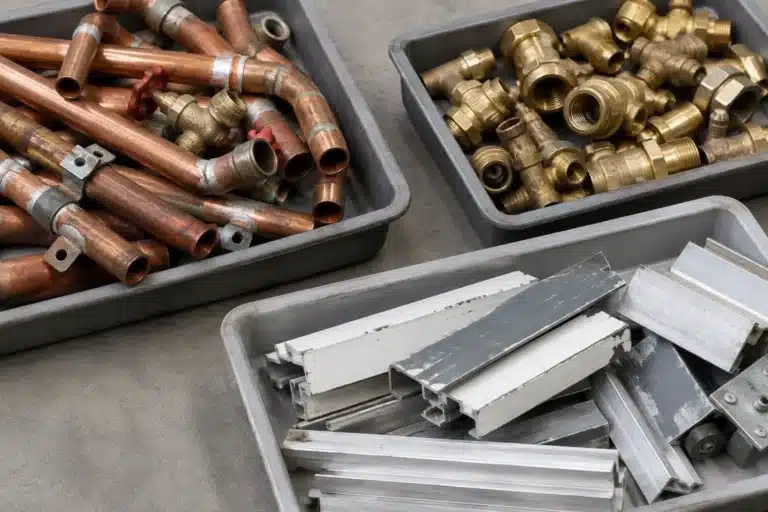
Look at each item as a whole rather than judging only its most visible surface. An old valve, for example, might have a substantial metal body alongside a handle, seal or other attached part. A fitting may also carry residue from installation or removal. Note these details without assuming they make the item unsuitable: the point is to give the collector an accurate description and ask what can be taken in its present condition.
A simple working sequence is inspect, separate, record and confirm. Inspect the loose material while the job is still fresh in your mind. Separate identifiable brass fittings from other metals and assemblies requiring a decision. Record an approximate quantity and photograph anything awkward to describe. Then confirm suitability and collection arrangements before treating the clear-out as complete. This order helps prevent a last-minute attempt to re-sort a heavy mixed load when a vehicle is due.
If other trades have used the same work area, establish which offcuts came from your plumbing job before adding them to the batch. Do not infer ownership from where an item was found. Keep the material in a safe, accessible place while you clarify what can leave the site and who is authorised to arrange its collection. For a small domestic job, that may mean checking with the customer; on a managed site, it may mean following the site’s own handover arrangements.
Premier Scrap Trading Ltd lists brass fixtures and plumbing fittings among its scrap metal categories. That is a useful starting point, not a blanket acceptance decision for every dismantled fixture. If a particular item has an unusual attachment or you cannot identify its main material, ask about that item before adding it to a proposed collection.
Separate brass fittings from other plumbing offcuts
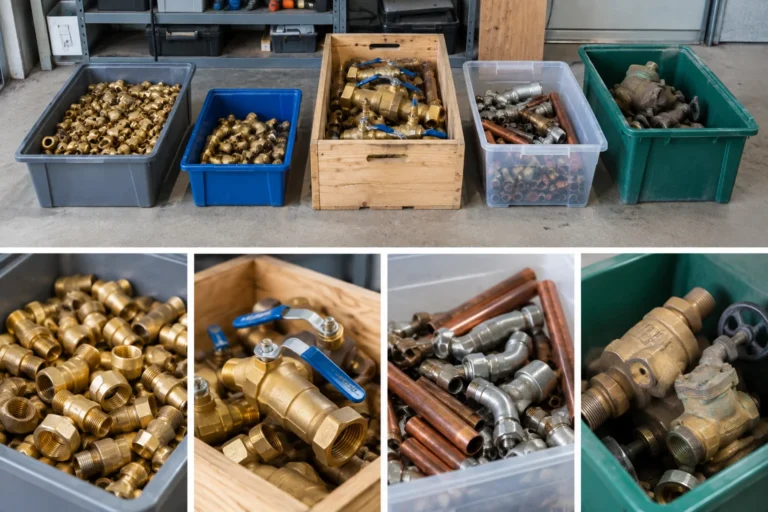
Sorting is most useful when it reflects the materials actually left by the work. Keep identifiable brass plumbing fittings apart from copper pipe and offcuts, steel brackets, cable and other material. Separate containers make it easier to describe a batch and allow a collector to assess the categories independently. There is no need to claim that every piece belongs to a precise commercial grade; an honest description such as loose brass fittings or copper pipe offcuts is more useful than a speculative label.
Use containers that suit the quantity and can be moved safely: for example, sturdy boxes or suitable tubs for small brass fittings, with heavier or longer pieces stored separately. Label each container in plain language. If you are working over several days, date the label or note the job it came from so that a later delivery of unrelated offcuts does not quietly change the contents. Keep containers where they will not obstruct a walkway or be mistaken for reusable stock.
A short inventory can be written on a job sheet or in a phone note. It should describe what is visible, not offer an unsupported valuation. A practical list might include:
- one container of loose, identifiable brass connectors and couplings;
- a separate group of copper pipe and cut ends;
- a small group of valves or tap assemblies with attached non-metal parts;
- any other separated metal, described by type where known;
- items whose material or ownership still needs checking.
Where several contractors share a site, consistent labels matter more than elaborate sorting claims. Ask colleagues not to add cable, general waste or unidentified fittings to a container marked for brass fittings. If the contents become mixed anyway, update the description rather than presenting the container as an uncontaminated batch. That preserves the value of your inventory when you enquire about collection.
Avoid turning a routine clear-out into a project to strip every assembly. The immediate aim is to make the identifiable materials visible and the exceptions obvious. If a metal component will not come free without force, it can remain in the group for an acceptance check. Likewise, keep any suspect or unfamiliar item out of a general brass container until you know what it is. Clear sorting helps a collector understand the proposed load, but it does not itself guarantee a particular price or acceptance outcome.
Handle fittings with plastics, sealants and other attachments
Used brass fittings often arrive with more than metal attached. A tap can retain a handle and internal parts; a valve can include seals; a connector can carry remnants of installation materials. Set these assemblies aside instead of treating the whole item as clean brass. The question for collection is not simply whether brass is present, but what else remains attached and whether the collector will take that particular combination.
Take a clear photograph of a representative item from each mixed group. Show the whole fitting and, where helpful, a second view of the attached plastic, sealant or other component. Then describe the rest of the group accurately: five similar valves with handles is more informative than a photograph of one isolated close-up with no quantity. If there are several different assemblies, provide an example of each rather than implying that one picture represents the whole batch.
Remove an attachment only if doing so is straightforward and safe within the work you are already carrying out. Do not cut into an unknown assembly, use excessive force or dismantle equipment solely because you assume it will raise the scrap return. Items left from a heating or plumbing installation may need site-specific handling before they are considered scrap. If a component is still connected, contains residual contents or is otherwise uncertain, deal with the job and site safety requirements first, then describe the separated item to the collector.
It helps to distinguish two questions when you enquire. First, can the fitting be collected as it stands? Second, if not, is there a simple preparation step the collector would ask you to take? These questions avoid committing time to unnecessary stripping. They also prevent a misunderstanding in which a collector expects loose metal but arrives to find intact fixtures with substantial attachments.
If you cannot readily identify whether an insert or attachment is metal, say so. Do not guess its composition or claim that the entire assembly belongs in the brass container. Keep mixed items grouped, photograph them and await an acceptance decision. The company’s collection FAQs can provide general background, but a description of the actual brass fittings is still needed for an enquiry about an unusual batch.
Document the batch before requesting collection
A useful collection request lets the recipient picture the material and the practical job of reaching it. Before you call or submit an enquiry, make a brief record of each separated group. Include the types of brass fittings, an approximate count or number of containers, other metals kept separately and the assemblies awaiting an acceptance check. If a container holds a mixture, describe the mixture rather than estimating that its contents are all brass.
Photographs should answer different questions. An overall image shows the scale of the batch and how it is stored; a closer image shows the typical loose brass fittings; further images show representative attachments or uncertain components. Photograph items in decent light with enough context to make their size understandable. Images can help the collector ask the right follow-up questions, but cannot establish a final assessment or replace an inspection where one is needed.
Include the collection location and access conditions. Say whether the material is at a house, workshop or managed site; whether it is on a ground floor or elsewhere; and whether there is a loading point or a site contact to speak to. If the scrap is still being removed from a job, explain when it is expected to be ready rather than requesting a visit on the assumption that dismantling will finish on time. Ask what access information is needed to arrange a suitable visit.
For a contractor coordinating more than one job, keep the batch description tied to its location. Do not send a photograph from one site while asking for collection at another, or combine quantities from several sites into a single unexplained estimate. If new scrap is added after your initial message, update the collector before collection. A revised photograph or short note is often simpler than trying to explain the change at handover.
Premier Scrap Trading Ltd describes mobile collection for domestic and commercial customers, including workshops and construction work. Its service overview establishes the type of enquiry you can make, while the actual visit and material suitability should be confirmed for your batch. As checked on 23 September 2026, the company describes collection across Greater London; do not assume that this settles access, timing or acceptance for a particular job.
Understand how a brass scrap price is assessed
A brass scrap price is not determined by the word brass alone. The material presented, its condition, the weight accepted and market conditions can all affect the available rate and the eventual amount. Mixed brass fittings may need a different assessment from a container of identifiable loose metal. Separate the question of whether an item can be collected from the question of whether it has resale value and, if so, what that value will be.
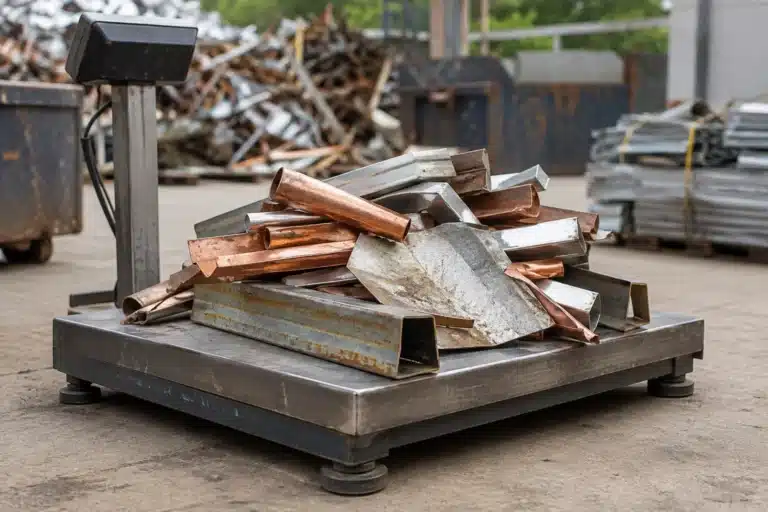
The company’s live scrap metal price page lists brass fixtures and plumbing fittings and gives indicative price information. It was checked on 23 September 2026, but a displayed figure should not be treated as an offer for an unexamined load. Rates can move, and the description of a material on a webpage cannot account for every attachment or the assessed weight of the actual batch. Ask for the rate available when you enquire and confirm the terms that will apply when the material is assessed.
For comparison, imagine two contractors each saying that they have a box of fittings. One has sorted loose, identifiable brass connectors; the other has intact valves, hoses and several components of uncertain composition in the same box. Their descriptions sound similar until the contents are examined. An enquiry that distinguishes those situations gives the collector a fairer basis for discussing suitability and an indicative rate. It does not establish a promised return for either contractor.
Premier Scrap Trading Ltd says that it weighs scrap, issues a printed receipt and pays eligible amounts by bank transfer. Ask how the material will be assessed and how an eligible payment will be documented. If you have several categories, clarify whether the brass fittings and other metals will be considered separately. Keep the receipt with your own job records so that the handover and any payment can be reconciled with the material you removed.
Do not commit a job budget to a speculative scrap return. The clearer approach is to record what you have, ask about collection and current pricing, and treat the assessed amount after weighing as distinct from any preliminary conversation. No particular fitting, container or mixed load should be assumed to have a resale value merely because some brass fittings appear on the company’s accepted-material list.
Prepare for identification and traceable payment
Scrap collection also has an administrative side. In England and Wales, the rules for scrap metal dealers require checks on a supplier’s name and address, and payment for scrap metal bought by a dealer must not be made in cash. The relevant GOV.UK scrap metal dealer guidance and supplementary guidance provide the official context. These rules were checked on 23 September 2026. They are a reason to prepare supplier details, not to assume that one particular document will satisfy every check.
When enquiring about brass fittings on behalf of a plumbing business, explain whose material it is and who will meet the collector. Ask which identification and address evidence the collector requires and whether business details are needed for the transaction. Have the details available before the visit rather than leaving them in a van or at another office. If a property owner or site manager needs to authorise removal, settle that separately from the identification required for a scrap transaction.
Make sure the name and transaction details you provide are accurate. If an employee is arranging collection for an employer, tell the collector rather than treating the employee and the business as interchangeable. Likewise, ask which bank details are needed if eligible material is to be paid for. Do not email sensitive documents or banking information to an unverified recipient simply because a collection enquiry has started; confirm the appropriate channel with the business.
The company states that eligible material is weighed, a printed receipt is provided and payment is made by bank transfer. That describes its stated transaction process, not a promise that every load will produce a payment. Keep a copy of the batch description and compare it with the receipt at handover. If something you expected to be assessed is excluded, ask for an explanation before treating the job record as complete.
Planning these details is particularly useful when the person who sorted the brass fittings will not be present at collection. Leave the site contact a clear inventory and explain which items need a decision. Identification, authorisation, material assessment and payment are different parts of the process; handling each deliberately is easier than trying to resolve every question when the batch is being loaded.
A practical collection plan after a Greater London plumbing job
Consider a heating contractor finishing a job in Hillingdon. The removed material includes loose brass connectors, copper pipe ends and two valves with plastic handles. Before asking for a collection, the contractor puts the identifiable brass fittings in one labelled container, the copper in another and the valves together for a separate check. That arrangement does not depend on any assumption about local demand or the value of a particular fitting; it simply makes the batch easier to describe.
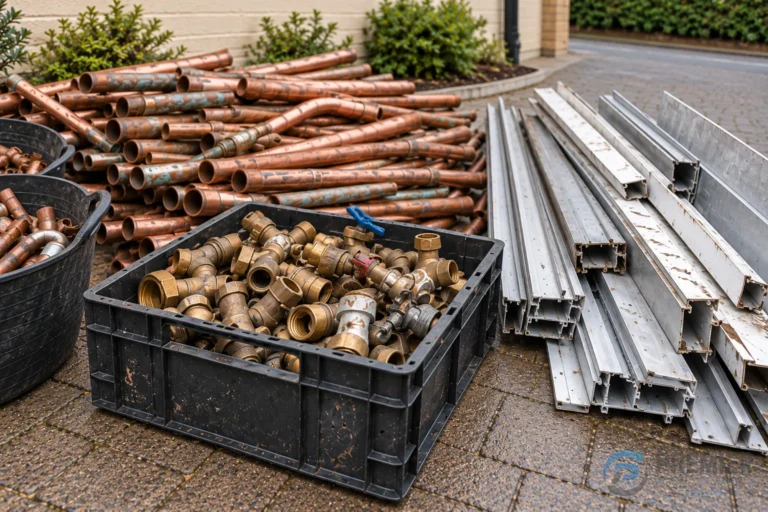
The contractor photographs the three groups, including a close view of the valve handles, and notes roughly how much material is ready. The enquiry identifies the site location, describes access and asks whether the valves can be taken with their attachments. It also asks what identification and supplier details are needed, when a suitable visit might be possible and how the brass fittings would be assessed. If more material becomes available before collection, the contractor updates the description.
This is an illustrative workflow, not a statement that a given Hillingdon job has a particular rate, collection slot or acceptance outcome. As checked on 23 September 2026, Premier Scrap Trading Ltd describes a mobile collection service across Greater London. The practical question remains whether this specific load and location can be accommodated on arrangements agreed with the company. The selected site should therefore be discussed directly rather than inferred from a general coverage statement.
On a busy job, the greatest benefit of the plan may be clarity at handover. The site contact knows which containers are proposed for collection and which valves still need a decision. The collector has seen representative pictures rather than an optimistic description of a clean brass load. If the valves are unsuitable, they can be dealt with separately instead of being silently mixed into the accepted material.
The same approach applies to a workshop clear-out or a contractor’s consolidated offcuts, provided the material is described accurately and the relevant person can authorise its removal. Keep separate job records if material comes from different customers. General area information can help frame an enquiry, but it cannot confirm a visit for a particular batch; ask about the specific location and arrangements before scheduling other work around it.

Final checks before booking a collection
Before contacting a collector, look over the batch once more. Are the identifiable brass fittings separate from copper and other offcuts? Have you flagged valves, taps or connectors with attached plastics, sealants or uncertain components? Can someone else understand the labels and find the containers without relying on your memory? A brief check now can prevent the contents described in an enquiry from differing substantially from the material offered at handover.
Compare the inventory with the photographs. If the images show only a handful of loose brass fittings but the proposed load also contains bulky assemblies, take an additional picture and explain the difference. Confirm the approximate quantity, where the material is stored and who can provide access. Where the site is shared, confirm that the proposed scrap is authorised for removal. If a fitting still needs a decision, keep it apart rather than slipping it into an otherwise clear container.
Check the scope of the request as well. Old washing machines and fridges are not accepted by Premier Scrap Trading Ltd, so do not add them to a suggested load. Ask about any other unusual, mixed or potentially problematic item individually instead of assuming that a general metal category covers it. If part of a job is not ready, say what is ready now and what might follow later; the collection arrangements should reflect the material actually available.
Finally, ask three practical questions: is the described batch suitable, what collection arrangements can be agreed and what price or assessment terms are available at the time? Keep those answers alongside the job record, together with any later receipt. This closes the loop from initial sorting through handover without assuming a fixed rate, a guaranteed time slot or acceptance of every component.
For brass scrap collection or other scrap metal collection in London, call Premier Scrap Trading Ltd on 07931 361 034 or book a collection online to describe your brass fittings, confirm what can be collected and ask about current prices and arrangements.
Related guides
Sources and further reading
Follow Premier Scrap Trading Ltd
Frequently asked questions
Can brass fittings from plumbing jobs be collected with copper pipe?
Tell the collector about both materials, but keep brass fittings and copper pipe in separate containers so each can be assessed appropriately.
Should I remove plastic parts from an old tap before collection?
Remove a part only if it comes away safely and easily; otherwise photograph the tap and ask whether it is suitable as presented.
Will a photograph confirm that brass fittings are accepted?
No. Photographs help explain a batch, but the collector still needs to confirm suitability and assess the material.
How should I describe brass fittings in a mixed bag of plumbing scrap?
List the identifiable metals, estimate the quantity, describe attached materials and provide photographs of representative items.
Is a quoted rate for brass fittings the final amount I will receive?
Not necessarily. The amount depends on the material accepted and its assessed weight, condition and applicable rate.
What details should a contractor have ready for a brass fittings collection enquiry?
Have the site location, access details, a description of the batch and your supplier or business details ready; ask which identification documents are needed.
Can I include old washing machines or fridges in the same collection request?
No. Premier Scrap Trading Ltd states that it does not accept old washing machines or fridges.
When is the best time to ask about the price for brass fittings?
Ask when you describe the batch and confirm the applicable terms again before collection, because rates and assessments can change.