


What should sign makers check before collecting aluminium offcuts?
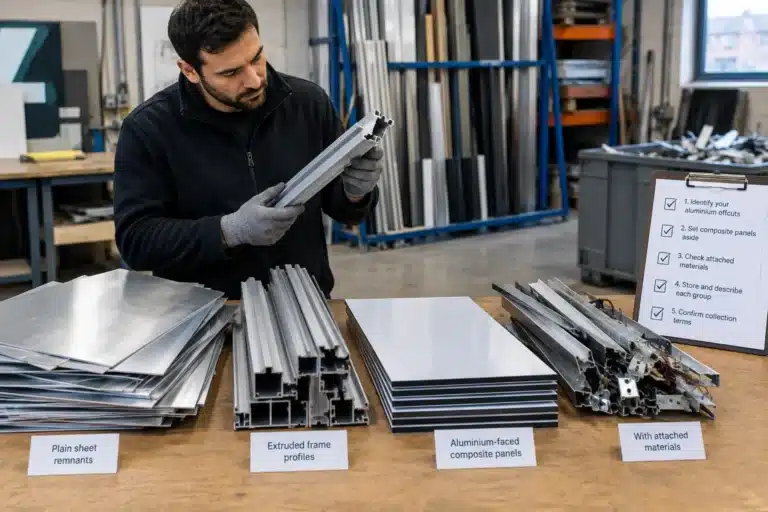
Before arranging collection, London sign makers should identify their aluminium offcuts, set composite panels aside, check attached materials, store and describe each group accurately, and confirm collection terms. These five checks help a workshop explain what it has without assuming that every sign-making material can be collected or paid for.
Materials from different jobs can look alike when viewed from the front. A plain sheet remnant, an extruded frame profile and an aluminium-faced composite panel do not necessarily belong in the same group. Their construction, finishes and attachments matter when the workshop describes the load and asks what can be collected.
Premier Scrap Trading Ltd lists aluminium among the metals it collects through its scrap metal collection in London. That does not establish acceptance, a grade or payment for every sign-making offcut. An accurate enquiry gives the collector a chance to assess known metal, composite products and uncertain pieces separately.
The checks work best in order. Start with material whose origin is known. Keep aluminium composite panels apart from solid sheet, then examine fixings and other additions. Finally, contain the groups and agree the practical and record-keeping arrangements before anything leaves the workshop.
You do not need to identify an alloy by sight or assign your own scrap grade. Stock records, product names, representative photographs and an honest account of uncertainty are more useful. A small pile of known profile ends needs less investigation than a mixed container filled across several jobs.
Use the five checks for the actual load, not just the neatest examples. If the workshop adds more pieces after making its enquiry, compare them with the identified groups. Any new composite or unidentified material should be described before collection rather than quietly added to a confirmed stack.
Check 1: Identify solid aluminium sheet and profile offcuts
Start with pieces you can link to known stock. Sheet trimmings from a recorded order and profile ends cut from a labelled batch provide useful starting groups. A purchase record, supplier description or remaining product label may identify what the workshop originally bought. Keep sheet and profiles recognisable even if you later ask whether they can be assessed together.
Colour is not a reliable identification method. A silver-looking surface does not prove that a whole piece is aluminium. Paint, printing or powder coating can also hide the underlying material. Check available stock information and, where helpful, examine an already exposed edge or cut end that is safe to inspect. If the construction is still unclear, move the piece to an unidentified group.
Offcuts often accumulate over many jobs. A bin initially used for sheet trimmings may eventually hold frame sections, fasteners, protective film and panel corners. Its contents become difficult to explain once tipped into a larger container. Separate storage at the bench, or a quick sort before the bin fills, preserves information that may otherwise be lost.
Distinguish bare profile ends from sections still incorporated into an assembly. A frame length with plastic inserts or other parts attached needs a more precise description than a plain metal offcut. Do not dismantle it just to make it appear cleaner. Record what remains and consider whether safe separation is practical under the third check.
Photograph representative aluminium offcuts for the enquiry. Show their general shape, a useful existing edge where available and a wider view of the approximate amount. Explain which pieces match recorded stock and which do not. Photographs help communicate the load, but a photograph alone cannot establish its grade or value.
Simple workshop labels can help: known sheet, known profiles and identification needed. They describe internal sorting, not an official waste classification. If staff share the storage area, explain what belongs in each group. Recheck a labelled container before collection, particularly if production continued after the first sort.
Where different jobs used different products, retain their labels or order references rather than treating every profile as identical. The aim is not to create excessive paperwork for each short piece. It is to avoid confidently describing a mixed load as one known material when the workshop has no basis for doing so.
Check 2: Set composite sign panels aside
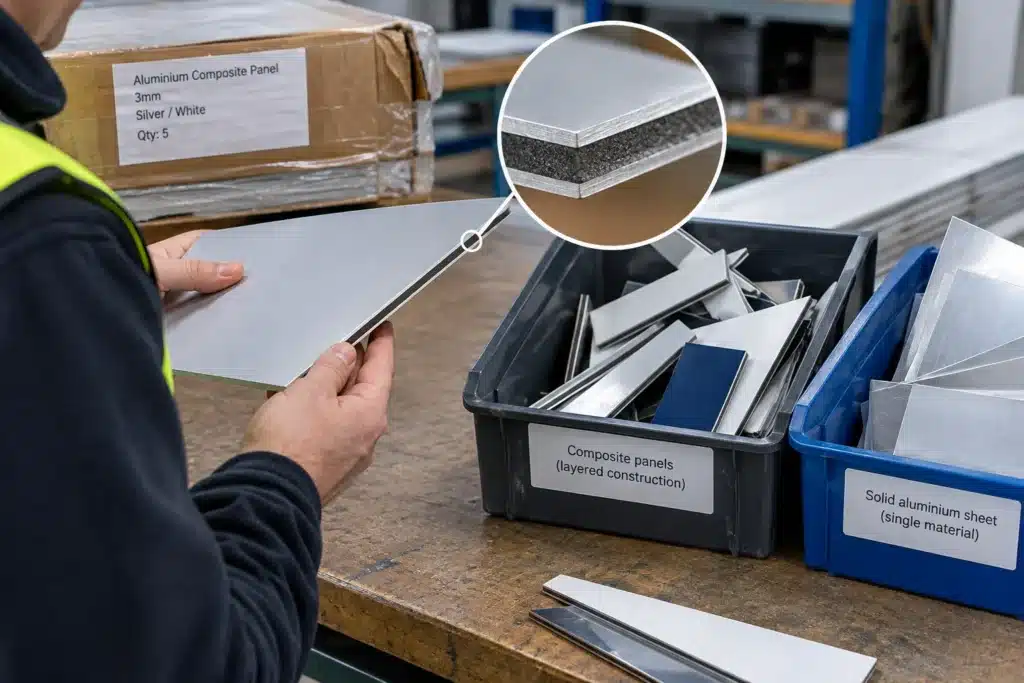
An aluminium-faced sign panel is not necessarily solid aluminium sheet. Some aluminium composite panels have metal cover layers around a different core. The visible face therefore cannot establish what the whole offcut contains. Product construction varies, so identify the panel product where possible rather than assuming every sign panel is made the same way.
Look for a product name on remaining packaging, an order record or a manufacturer’s specification. An existing cut edge may reveal a layered construction. Inspect only an edge that is safely accessible; there is no need to cut, snap or strip a panel solely to find out what is inside. If its edge is hidden, explain that limitation instead of guessing.
Store composite panel remnants away from known solid sheet. Narrow strips can disappear under larger metal offcuts, particularly when both have similar-looking faces. Label the panel group, photograph representative faces and existing edges, and note any printing, coating or backing. This gives the collector a clearer basis for discussing the specific product.
The distinction remains important even when the panel contains aluminium. Its other layers are still part of the item offered for collection. Describing a panel stack simply as solid aluminium offcuts would conceal that difference. The manufacturer’s HYLITE product information illustrates a layered aluminium composite product; it does not describe every panel a sign maker might use.
If you cannot find a manufacturer’s name, report what you know. Say whether the pieces are rigid panels, whether an existing edge shows layers and whether an additional backing remains attached. Give an approximate quantity and identify the core as unknown. An accurate description of uncertainty is better than assigning the panels to a familiar metal category.
Ask whether that identified product, or an unidentified composite group, can be collected and on what terms. An answer about solid sheet does not automatically apply to aluminium composite panels. Keep the groups separate while you establish the arrangements, even if they arose from the same sign-making job.
For a stack containing several panel products, do not rely on a photograph of only one corner. Show representative pieces from each recognisably different type. If you cannot tell where one product ends and another begins, describe the stack as mixed and ask how the collector wants it presented.
Check 3: Separate attached materials and other waste
Inspect what remains on or beside the metal. Sign-making offcuts may carry protective film, adhesive, plastic backing, fixings or parts of an assembled display. An attachment that is obvious on a large piece may be hidden among short trimmings. Describe the item the collector would actually receive, not an idealised version of bare sheet.
Where removal is safe and straightforward, put separated non-metal material in an appropriate container. If a component is bonded or difficult to remove, leave the piece intact and explain what is attached. Do not force it off or make an unnecessary cut because you expect a cleaner-looking load to have a particular value. Assessment, rather than appearance alone, determines the terms.
Coatings deserve an equally careful description. A painted or printed offcut may be recognisable as a metal product, but the finish does not establish its scrap grade or acceptance. Photograph representative surfaces and mention paint, film or other known coatings. If one batch contains several finishes, avoid describing the entire batch by its cleanest piece.
Keep unrelated workshop waste out of containers marked for identified aluminium. Packaging, loose plastics and other production leftovers should remain separate. GOV.UK’s guidance on sorting and storing business waste advises businesses to store different types separately. This helps avoid contamination and supports accurate descriptions when waste is transferred.
When an unfamiliar item turns up, ask three practical questions within this check: is its main material known, is it composite, and are other parts still attached? The answers help decide which existing group it belongs in. If none is clear, place the item with unidentified material and mention it in the enquiry.
Use specific descriptions that workshop colleagues and a collector can understand. “Profile ends with plastic inserts fitted” says more than “mixed aluminium”. “Painted sheet trimmings, with stock details available” is clearer than an unsupported grade. Labels and the written enquiry should describe the same physical material.
Do not let a small quantity of unrelated waste disappear into a larger metal stack. Its presence can affect how accurately the whole load is described. A separate container also makes it easier to ask about an unusual item without confusing that question with the arrangements for known sheet and profiles.
Check 4: Store and describe the load accurately
Once sorted, keep each group contained and distinct. Use storage suited to the size and shape of the offcuts. Small trimmings need a container that prevents pieces escaping. Longer profiles need stable storage away from routes through the workshop. Mark the groups clearly enough that someone who did not do the sorting can identify them.
GOV.UK says businesses must store waste safely and securely in suitable containers and label it clearly. It also advises keeping different waste types separate. Light pieces may need a cover so they do not blow away. Choose an arrangement that fits the workshop and the material rather than treating one container as suitable for every type of offcut.
Turn the physical sort into a written account. For example, record a container of known sheet trimmings, a bundle of profile ends and a separate stack of composite panels with an unidentified core. Note coatings, attached parts and any unclassified pieces. An approximate quantity helps with an enquiry, but it does not replace a clear description of what each group contains.
Businesses must identify and classify waste before collection, disposal or recovery. They must describe it correctly in the information passed to a waste contractor. GOV.UK waste-classification guidance explains the information required, including a waste code and details of the material and the process that produced it. A workshop label is an organisational aid, not a substitute for correct classification.
Do not select a classification code solely because a container has been labelled aluminium. Composite panels and assembled items can contain other materials. If a waste item’s composition or status is unclear, seek appropriate guidance before assigning its classification. Keep uncertain pieces separate while their handling is established rather than describing everything as known solid metal.
Before the load moves, compare its storage labels, photographs and written description. A late production job may have added new offcuts to a previously sorted container. Update the account if that happened. The description used for transfer must match the material actually leaving the premises, not just the material photographed earlier.
Make sure the person arranging collection can find each group and understands which pieces remain uncertain. Clear storage reduces the chance that a separate panel stack is accidentally included with known sheet. It also makes questions about access and the approximate amount easier to answer without moving everything again.
Check 5: Confirm collection, records and any eligible payment
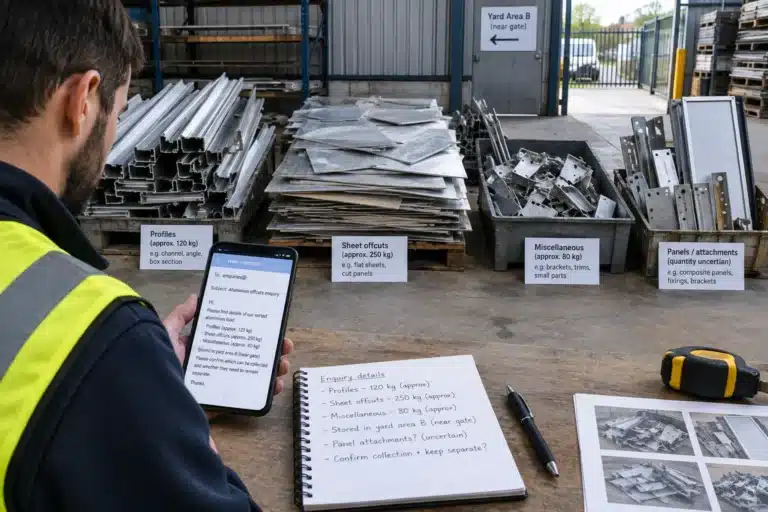
Send a concise enquiry that reflects the sorted load. Include photographs of each material group, product details where available, approximate quantities and any uncertainty about panels or attachments. Explain where the groups are stored and anything relevant to reaching them. Ask which can be collected and whether they need to remain separate.
Premier Scrap Trading Ltd describes weighing material and making bank-transfer payments for eligible metal. Its scrap metal prices page offers price information, but a displayed figure is not a quotation for an unidentified workshop load. Eligibility and value can depend on grade, condition, weight and current demand. These operating arrangements were checked on 23 September 2026; confirm current terms when enquiring.
For each load of non-hazardous business waste leaving the premises, a waste transfer note or a document containing equivalent information is required. Both parties must retain a copy for two years. Read the GOV.UK waste transfer note guidance and establish who will prepare the information before collection. Do not assume those arrangements cover a material that needs different controls.
Confirm what record the workshop will receive and how each material group will be assessed. Clearing space and receiving payment for eligible metal are separate outcomes. Ask what happens if known sheet and profiles can be collected but a particular composite panel cannot. Keep any group that has not been agreed out of the proposed load.
Official Scrap Metal Dealers Act guidance explains restrictions on dealers’ payment methods when buying scrap metal. The company states that it pays for eligible weighed material by bank transfer. A rough weight estimate or assumed grade cannot establish the amount payable, so ask how the actual load will be weighed and assessed.
Settle the practical arrangements as well: who will be present, where the offcuts are stored, how they can be reached and which groups are included. If the workshop changes the load after agreeing terms, send an update. Clear information reduces the chance that the material presented differs from the photographs the collector assessed.
Keep a copy of the enquiry with the workshop’s records. It can help the person overseeing collection check that separate panel and attachment groups are handled as discussed. The enquiry does not replace the required transfer information, but it gives everyone a consistent account of what was offered.
Putting the five checks into practice at a sign-making workshop
Imagine a workshop clearing leftovers from several completed sign jobs. A tray holds short sheet trimmings with matching purchase records. Another contains profile ends. Nearby are printed panel offcuts and a few assembled pieces with fixings and plastic parts. Putting everything into one pile would obscure the details needed for a useful collection enquiry.
First, staff identify known sheet and profile stock and keep those groups distinct. Unlabelled pieces go aside for further identification. They then separate panel remnants from solid metal. An existing edge may reveal layers, while an order record may name the product. Staff can report what they find without altering a panel just to inspect it.
Next, they look at the assembled pieces. Non-metal components that can be removed safely go into appropriate separate storage. Bonded or awkward parts remain in place and are described. Painted offcuts are recorded as coated rather than assigned an assumed scrap grade. This leaves known metal, mixed pieces and uncertain material visibly apart.
The workshop contains short trimmings, secures longer profiles and labels each group. Its enquiry identifies the known products, flags the unknown panel core and includes photographs of representative faces and exposed edges. Approximate amounts help explain the job. The photographs also show whether attachments remain on any assembled pieces.
For a sign-making workshop in Hillingdon, the practical Greater London takeaway is to photograph sorted aluminium offcuts and panel edges before asking which groups can be included. This example does not establish acceptance at a particular address. Premier Scrap Trading Ltd describes mobile collection across Greater London; that coverage information was checked on 23 September 2026. Confirm arrangements for the actual location and load.
If a product label has disappeared, check purchase records and compare the item with known stock. When that does not resolve the question, describe the material as unidentified. If several panel products are mixed together, show the different visible constructions rather than naming the entire stack after one piece.
Quantities can also be uncertain. Give an approximate number of containers, bundles or panels and explain that the figure is an estimate. Update it if more waste is added. Precise-looking figures based on a glance at a full bin are less helpful than an honest estimate paired with good photographs.
Finally, staff confirm collection terms and the records needed when material leaves. They can refer to the same groups throughout the discussion. Completing five preparation checks does not promise that every piece will be taken. It gives the workshop a load it can explain and a request the collector can assess.
Resolve common uncertainties before booking
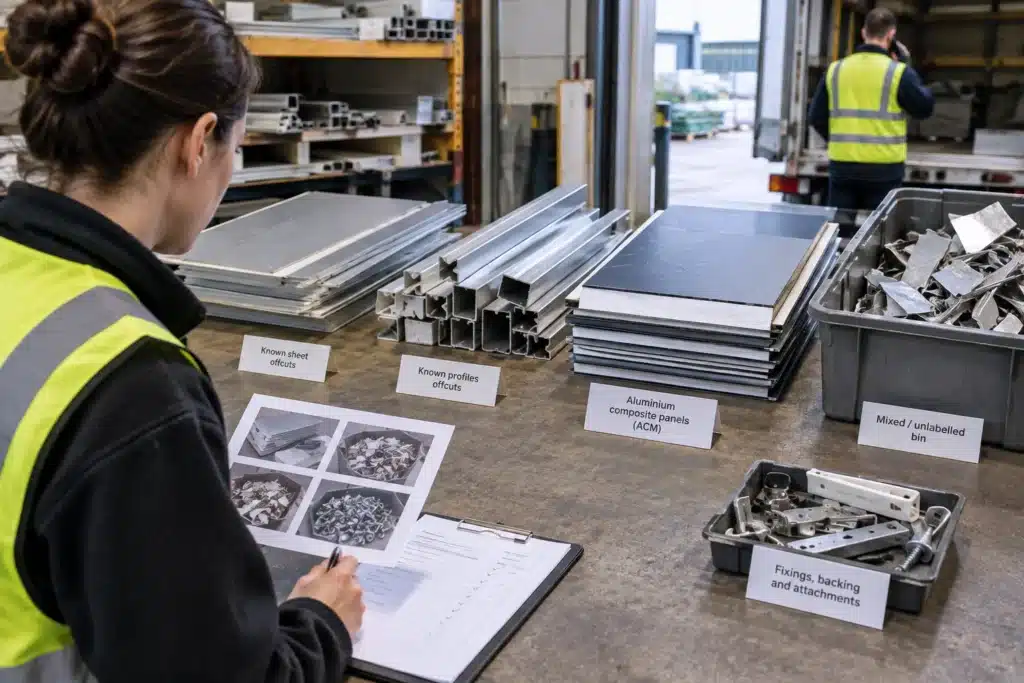
Review the boundary between identified solid metal and everything else. Known sheet and profile offcuts are easier to describe than a mixed, unlabelled bin. Aluminium composite panels need their own description even when their visible faces resemble sheet. Fixings, backing and other attachments should remain visible in the account of the proposed load.
This review confirms the five checks rather than adding another one. Compare photographs with what is now in storage. Ask whether a new job introduced unfamiliar pieces after the workshop made its first enquiry. Make sure the person arranging collection knows which panel products have been identified and which still need confirmation.
Several common questions can be settled together. Can the collector take known sheet and profiles? Can it also take a stated composite product or assembled piece? Is there a minimum amount relevant to this collection? What transfer records and payment terms apply to the material assessed? An answer about one group should not be extended to all sign-making scrap.
Painted pieces also deserve a direct question when their status is uncertain. Give available stock details and photographs; do not infer a grade from a neat finish. If a panel’s core is unknown, say so and keep it apart. If an attachment cannot be removed safely, describe the complete piece instead of presenting it as bare aluminium.
Remember business-waste responsibilities alongside potential scrap value. The workshop must give an accurate waste description and use appropriate transfer information when waste leaves. A published price or estimated weight cannot establish the value of a coated, composite or assembled item. Seek assessment for uncertain groups rather than merging them with identified aluminium offcuts.
Sorting as offcuts arise can make the next clearance simpler. Keeping a stock reference with sheet trimmings and a separate space for panel remnants is often more useful than reconstructing details after they mix. The important result is an account that matches the load handed over, including finishes, attachments and unresolved questions.
Premier Scrap Trading Ltd provides information about its Greater London collection arrangements. This coverage information was checked on 23 September 2026. Confirm current availability, material acceptance and how each agreed group will be handled before moving it from workshop storage.
Once the five checks are complete, make a specific enquiry rather than assuming acceptance or value. Call Premier Scrap Trading Ltd on 07931 361 034 or enquire about a collection online to discuss your sorted materials, confirm arrangements and ask for current prices.
Related guidance
Sources and further reading
- Premier Scrap Trading Ltd — scrap metal collection
- Premier Scrap Trading Ltd — scrap metal prices
- 3A Composites — HYLITE product information
- GOV.UK — sorting and storing business waste
- GOV.UK — classify different types of waste
- GOV.UK — waste transfer notes
- GOV.UK — Scrap Metal Dealers Act 2013 supplementary guidance
- Premier Scrap Trading Ltd — Greater London collection areas
Follow Premier Scrap Trading Ltd
Frequently asked questions
Can aluminium composite panels go with solid aluminium offcuts?
Do not assume they can. Some panels have aluminium faces around a different core. Keep them separate, identify the product where possible and ask whether each panel group can be collected.
Can painted or coated aluminium offcuts be collected?
They may be suitable, but a finish does not establish the underlying material, scrap grade or value. Describe the metal and coating, send photographs and ask for an assessment.
What if a product label is missing?
Check purchase records and compare the piece with known stock. If its construction remains uncertain, keep it apart from identified aluminium and send clear photographs rather than guessing.
Should a workshop remove fixings and adhesive?
Separate attachments only when this is safe and straightforward. Leave difficult or bonded components in place, then describe them so the collector can assess the material received.
Is there a minimum quantity for aluminium scrap collection?
No minimum quantity is established here. Give the collector an approximate amount and ask whether collection can be arranged for your load and location.
Will every load of sign-making scrap receive payment?
No. Eligibility depends on the material assessed and the agreed arrangements. Premier Scrap Trading Ltd describes bank-transfer payment for eligible metal after weighing; confirm current terms when enquiring.
What paperwork is needed when non-hazardous business waste leaves a workshop?
Each load needs a waste transfer note or a document containing equivalent information. Both parties must keep a copy for two years. The waste must also be classified and described accurately.
What should I include in a collection enquiry?
Send photographs of separate material groups, available product details, approximate quantities and access information. Flag composite panels, coatings, attachments and unidentified pieces, then ask which groups can be collected.