


The UK Critical Minerals Strategy 2035 has a practical message for households, tradespeople, property managers and businesses in London: materials already in use can be an important resource when they are identified, stored and routed appropriately. For everyday metal work, that often means separating obvious recyclable metals where it is safe to do so and describing them clearly before collection.
It does not mean that every metal item, appliance, battery or electrical product belongs in an ordinary scrap load. Complex products can contain components that need a different route. Premier Scrap Trading Ltd provides scrap metal collection in London for eligible non-hazardous recyclable metal across Greater London. Customers should confirm what they have before arranging a collection, particularly where a load is mixed, attached to other materials or includes unknown equipment.
This guide explains the national ambitions without turning them into a local target or a promise about individual items. It also sets out practical preparation steps that can help London customers communicate clearly about their metal and avoid assumptions about specialist recovery.
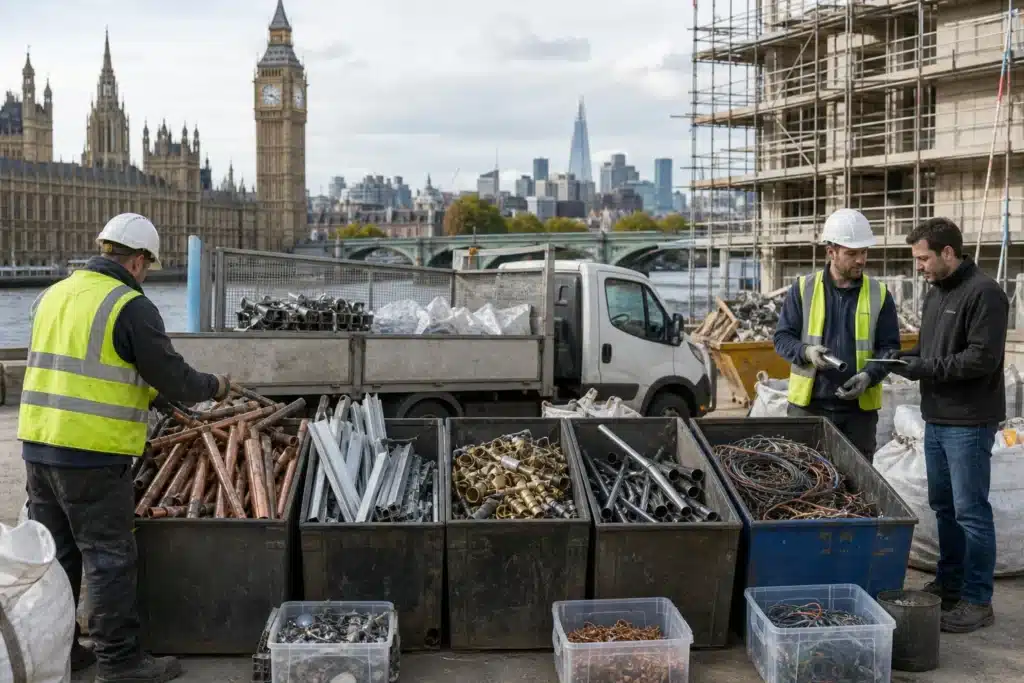
UK Critical Minerals Strategy 2035: the practical answer for London
The UK Critical Minerals Strategy 2035 is a national framework concerning materials that are important to the economy and may be vulnerable to supply disruption. Its Vision 2035 includes ambitions for domestic production, recycling and more diverse supply. The strategy is relevant to metal recycling in London because careful collection and material information can support the wider circular economy.
The immediate task for a householder clearing a renovation, a contractor managing site offcuts or a workshop sorting accumulated material is simpler than the policy language suggests. Keep identifiable material streams distinct when practical, avoid mixing them with avoidable rubbish or unknown items, and give a collector an honest description of what is present.
Ordinary collection and specialist critical-mineral recovery are not the same service. Copper pipe, brass fittings, aluminium offcuts and steel brackets may be straightforward recyclable scrap where suitable for collection. Battery packs, electronics, magnets, solar panels and sealed or mixed equipment may need prior confirmation and a specialist battery, WEEE or authorised treatment route.
The official UK Critical Minerals Strategy describes recycling, reuse, repair and longer product life as parts of a wider approach. It should not be read as an instruction for every customer to dismantle products or make technical material classifications. Safe preparation and accurate information are more useful than guessing.
What Vision 2035 aims to achieve
Vision 2035 sets three linked UK-wide ambitions. They concern aggregate annual demand for critical minerals, not the performance of a particular borough, collection company, building project or individual household. They are ambitions for 2035 rather than fixed outcomes, and they do not establish a future price or availability for any material.
- Domestic production: at least 10% of aggregate annual UK demand for critical minerals is intended to be met through domestic production by 2035. This includes at least 50,000 tonnes of domestic lithium production, or lithium-carbonate equivalent.
- Recycling: 20% of total annual UK demand for critical minerals is intended to be met through recycling products to recover critical minerals by 2035.
- Diversification: no more than 60% of aggregate annual UK demand is intended to be supplied by any one country by 2035.
The Vision 2035: Critical Minerals Strategy also sets out two broad policy objectives: optimising domestic production and building resilient UK and global supply networks. Recycling sits alongside production, processing, manufacturing, reuse, repair, collection and international trade.
It is one part of a larger supply-chain picture.
For London customers, the 20% ambition is best understood as context for better resource management. It provides a reason to value clear material streams and suitable recycling routes, but it does not require a household, contractor or collector to recover a defined percentage of anything. Nor does it decide whether a specific item is suitable for a particular collection.
What the 20% recycling ambition does not mean
The recycling ambition can be misunderstood when it is taken out of its national context. It is not a 20% recycling target for Greater London, and it does not measure the recycling rate of all metal. It is a UK-wide aggregate aim for meeting a share of annual critical-mineral demand through recycling products to recover critical minerals.
It is not a quota for a landlord, facilities manager, householder, construction site, workshop, recycler or collector. A site that separates copper pipework from general waste is making a practical improvement, but it is not thereby reporting progress against the national 20% ambition. Equally, a mixed product that requires specialist treatment should not be placed in an ordinary metal pile simply to increase a collection volume.
The ambition does not classify all recyclable metals as critical minerals. It does not mean every product contains recoverable critical minerals, and it does not establish that recovery can take place through ordinary scrap handling. Specialist processing can be required for products containing batteries, electronic components, magnets or other complex assemblies.
It also does not guarantee a price, a collection date, acceptance of a specific load or resale value for every item. Metal values can vary by grade, weight, condition and market demand. Whether a collection is suitable depends on the actual material, access, attachments and the need for any specialist route.
Critical minerals, growth minerals and ordinary scrap metal
These terms describe different things and should not be used interchangeably. A critical mineral is a policy classification linked to economic importance and supply risk. A growth mineral is identified because of its importance to future industrial growth. Ordinary scrap metal is a practical description for recyclable metal material that may be collected and processed through an appropriate route.
Copper is the clearest example in the supplied strategy material. The Critical Minerals technical annex says that copper is not classed as critical. It identifies copper instead as a growth mineral, while recognising its importance to advanced manufacturing and the clean-energy transition.
That distinction does not reduce copper’s practical relevance to metal recycling London activity. Copper pipe, fittings and certain cable can be valuable recyclable streams when they are identifiable and suitable for collection. It does mean that it is inaccurate to label copper as a critical mineral in this context.
This article does not assign a critical-mineral classification to aluminium, brass, stainless steel or ferrous metal. They remain common recyclable streams that can be useful to keep separate where safe and practical. Their route depends on their condition and composition, including insulation, coatings, plastic, ceramic, glass, timber, fluids or electrical parts that may be attached.
Customers do not need to become mineral specialists. A clear description such as “clean copper pipe from a bathroom refit”, “aluminium window offcuts” or “mixed steel brackets with plastic fittings” gives more useful information than a broad claim that everything is critical material.
Common London scrap streams and complex products
The table below separates familiar metal streams from products that need extra care. “Subject to confirmation” is important: it means the item should be described before collection, not assumed to be accepted. Do not dismantle unfamiliar equipment merely to sort it.
| Material or product | Typical examples | Preparation | Likely route | Key caution |
|---|---|---|---|---|
| Copper | Pipework, fittings, cylinders and cable offcuts. | Keep separate from general waste where practical; mention insulation and fittings. | Ordinary metal recycling, subject to confirmation. | Copper is a growth mineral in the annex, not classed there as critical. |
| Aluminium | Frames, trim, ladders, sheet and offcuts. | Describe coatings, composite sections and major non-metal attachments. | Ordinary metal recycling, subject to confirmation. | Mixed or composite items are not equivalent to clean aluminium. |
| Brass | Taps, valves, locks and plumbing fittings. | Group identifiable fittings together if safe. | Ordinary metal recycling, subject to confirmation. | Flag substantial steel, plastic or ceramic parts. |
| Stainless steel and ferrous metal | Fixtures, brackets, gates, radiators and site offcuts. | Keep accessible and identify attached components. | Ordinary metal recycling, subject to confirmation. | Unknown sealed units need checking first. |
| Car batteries | Vehicle starter batteries. | Keep upright, secure and separate; confirm first. | Only a suitable confirmed route. | Do not mix with general metal or damaged unknown batteries. |
| Battery packs, electronics and magnets | Tool packs, e-bike batteries, motors, computers and speakers. | Keep intact and separate; record what the item is. | Specialist battery, WEEE or authorised treatment route may be needed. | They are not ordinary loose metal. |
| Solar panels and mixed equipment | Panels, inverters and plant-related units. | Store safely, avoid breakage and ask for route guidance. | Specialist or authorised treatment route may be needed. | Do not add without confirmation. |
| White goods | Kitchen appliances and refrigeration equipment. | Keep separate and identify exactly what is present. | Confirm an appropriate route elsewhere. | Premier Scrap Trading Ltd does not accept old washing machines or fridges. |
The Government-commissioned UK critical minerals midstream and recycling capability report, published on 2 April 2025, concerns UK midstream processing and the recycling and recovery of critical minerals. Its scope underlines why collecting ordinary metal should not be confused with specialised material recovery.
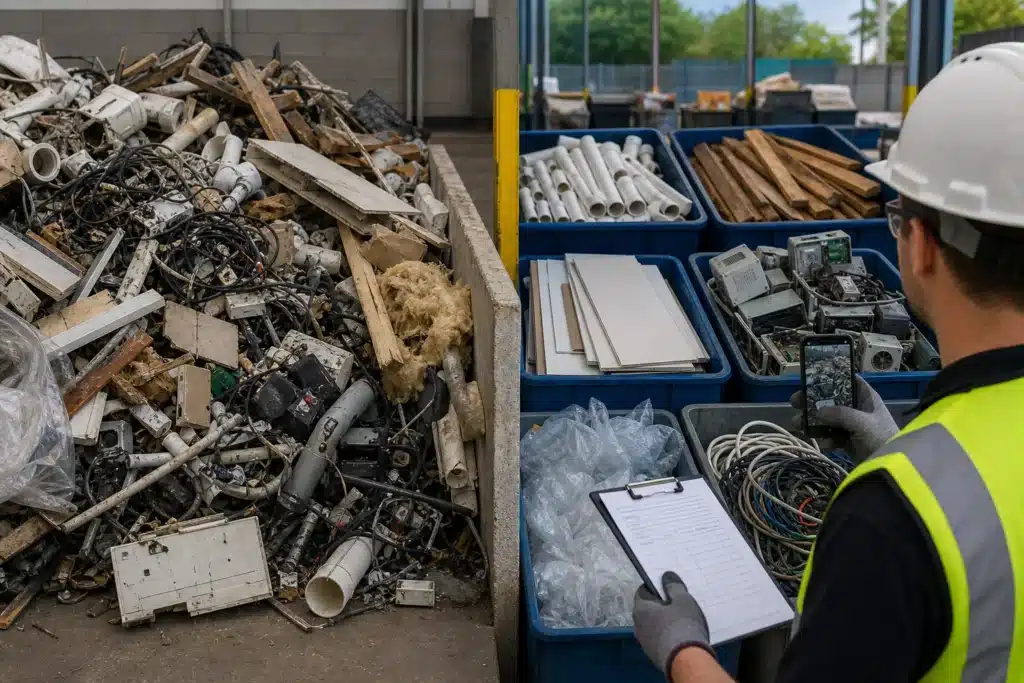
Why separation and accurate descriptions matter
Separation is not about making a site look perfect. It is about retaining useful information about the material and reducing avoidable uncertainty. A pile containing clean pipework, timber, plasterboard, packaging, electrical parts and unknown equipment is harder to assess than identifiable groups stored safely nearby.
Attached non-metal parts can change the handling route. Insulation on cable, plastic housings, glass, ceramics, oils, fluids, batteries and electronic controls may all be relevant. Customers should not attempt risky disassembly, particularly with sealed, powered, damaged or unfamiliar items. Instead, take photographs where useful and describe the material as it is.
Accurate descriptions also help distinguish common scrap from potentially complex products. A collector can assess whether a load of pipe, fittings, frames or steel offcuts is suitable for ordinary collection. A battery module, electronic cabinet or mixed plant item may require a different arrangement. This approach supports responsible routing without claiming that every item can yield a particular material.
For businesses and managed properties, short records can make communication clearer. A note of the material type, approximate amount, source location and attached components gives a facilities team, contractor and collector a shared starting point. It can also help prevent reusable or specialist items being mistaken for routine metal.
A step-by-step sorting and record-keeping checklist
Use this checklist proportionately. The aim is safer, clearer preparation, not unnecessary work or hazardous dismantling.
- Identify obvious metal categories. Where safe, separate copper, aluminium, brass, stainless steel and ferrous metal into simple groups.
- Keep material reasonably dry and accessible. Move eligible metal away from avoidable rubble, loose household waste, food waste and liquids where practical.
- Set aside complex products. Do not mix battery packs, electronics, magnets, solar panels, sealed equipment or unknown units with ordinary metal without prior confirmation.
- Record attached components. Note insulation, plastic, timber, glass, ceramics, fluids, cylinders, electronics or other parts that remain attached.
- Make a short inventory. For a business or project, record the material type, approximate quantity, site area and date it became available.
- Photograph unusual loads. Images of cable, large assemblies, plant components or mixed equipment can help establish whether a route is suitable before travel is arranged.
- Confirm acceptance. Describe the load accurately when requesting scrap metal collection in London, especially when the material is mixed or potentially hazardous.
For eligible material with resale value, Premier Scrap Trading Ltd weighs the material, provides a printed receipt and makes payment by bank transfer. The company’s scrap metal prices information is a useful starting point for discussing current values. Price information was checked on 3 August 2026 and can change with grade, weight, condition and market demand.
Practical examples for Greater London properties and sites
Household renovation: A bathroom or kitchen project can create copper pipework, brass taps, aluminium trim and steel brackets. Keep these apart from timber, plasterboard, packaging and general rubbish where practical. Complete appliances and items with electrical components should be described rather than assumed suitable for a metal load.
Trade van or workshop clear-out: Plumbers, electricians and fabricators may have pipe, fittings, cable offcuts, sheet metal and worn components. Grouping material by obvious type can make collection discussions more straightforward. For cable, mention whether it is insulated, mixed with plugs or attached to equipment. Keep tool batteries and electronic tools separate.
Construction or refurbishment site: Designate an accessible area for identifiable metal offcuts so they are not lost in mixed demolition material. Flag fire doors, glazing, insulation, wiring systems, sealed components or other attached materials. A simple note of the source area can help where several work zones are being cleared.
Facilities-management project: Offices, shops and commercial properties can produce shelving, fixtures, fittings, metal furniture and plant-related items. List the item type, likely material, quantity, location and any electrical or battery-powered part before arranging a collection. This helps prevent a complex item being treated as simple metal.
For general location information, see areas covered across Greater London. Coverage was checked on 3 August 2026. Customers should still confirm their address, access conditions and exact materials before booking.
London’s role in a wider critical-minerals supply chain
London has a legitimate connection to this national topic beyond local collection. Vision 2035 identifies the capital as a centre for mining finance and recognises the London Metal Exchange’s role in metals trading. This helps explain why critical-minerals policy and metals-market developments matter to a London audience.
That context must be kept in proportion. It does not create a Greater London recycling target, demonstrate London’s contribution to the national ambition or show that every local metal stream contains critical minerals. The local practical connection is material management: keeping eligible metal distinct, reducing avoidable contamination and ensuring complex products are considered for suitable routes.
For organisations, modest improvements can make supply-chain conversations clearer. A contractor can identify segregated metal streams. A property manager can record that battery-powered or electronic equipment was set aside. A workshop can distinguish clean production offcuts from mixed end-of-life equipment. These actions are more meaningful than applying a broad policy label to every item.
How Premier Scrap Trading Ltd can help with eligible metal
Premier Scrap Trading Ltd is a family-run business established in 2008. It provides mobile scrap metal collection across Greater London for households, landlords, tradespeople, workshops, offices, shops, construction sites and other commercial or industrial properties. Its role here is specific: collection of eligible non-hazardous recyclable metal, not specialist extraction of critical minerals from every complex product.
Before arranging a collection, provide the material types, approximate quantity, postcode or site address, access details and whether items are loose or attached. Mention batteries, electronics, fluids, insulation or unknown components. Photographs can be helpful for unusual loads. This gives the business the information needed to confirm whether the material is suitable and discuss practical arrangements.
Eligible materials are weighed on site. A printed receipt is provided, and where the material has resale value, payment is made by bank transfer. Values are not fixed and should be discussed at the time because grade, condition, weight and market demand can all matter. Old washing machines and fridges are not accepted.
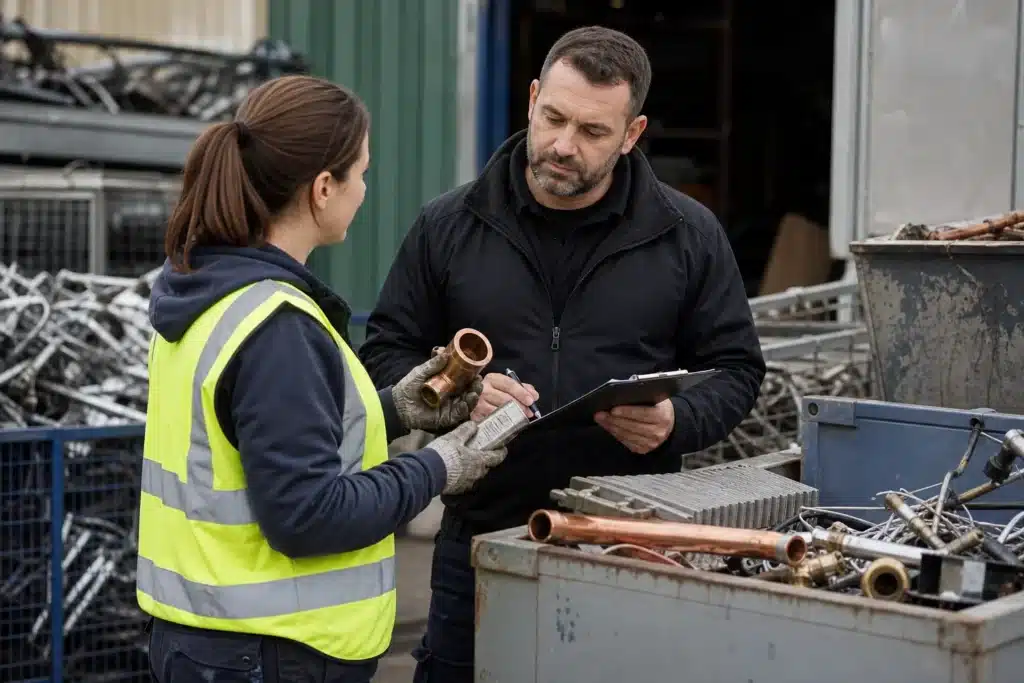
Confirm your London scrap-metal collection
The UK Critical Minerals Strategy 2035 offers useful long-term context for material recovery, but the immediate decision is practical: identify the metal you have, keep complex products separate and ask for confirmation before collection. That supports a clearer route for the material without making unsupported assumptions about recovery, acceptance or value. If you have eligible non-hazardous recyclable metal in London, call Premier Scrap Trading Ltd on 07931 361 034 or book a collection online to confirm what can be collected and ask for current prices.
Related guides
Frequently asked questions
Is there a London target to recycle 20% of critical minerals by 2035?
No. The 20% ambition is a UK-wide aggregate aim for meeting annual critical-mineral demand through recycling products by 2035.
Is copper a UK critical mineral?
Why should I separate common recyclable metals?
Can batteries go in an ordinary scrap-metal collection?
Do not mix batteries or battery packs into ordinary scrap without prior confirmation. They may require a specialist battery or authorised treatment route.
Can electronics and magnets be collected as ordinary metal?
Can solar panels be added to a mixed metal load?
Do not assume that they can. Store panels safely, avoid breakage and seek prior confirmation because a specialist route may be needed.
What details should I provide before arranging a collection?
Provide the material type, approximate quantity, Greater London address, access details and information about attachments, electronics, batteries or other unusual components.