


WEEE recycling 2026 starts with one simple rule: do not assume an electrical item can go into a normal scrap-metal collection. Electrical equipment, batteries, vapes, cooling appliances and mixed loads can need a different route, even where they contain valuable metal. Identify the item, keep it intact and confirm the receiving service before moving it.
For London households, landlords, electricians, tradespeople and businesses, the practical outcome is safer sorting and fewer unsuitable loads.
Premier Scrap Trading Ltd can discuss eligible, non-hazardous metal and confirm the appropriate collection arrangement, but customers should describe any electrical, battery-powered, cooling or damaged item accurately before booking.
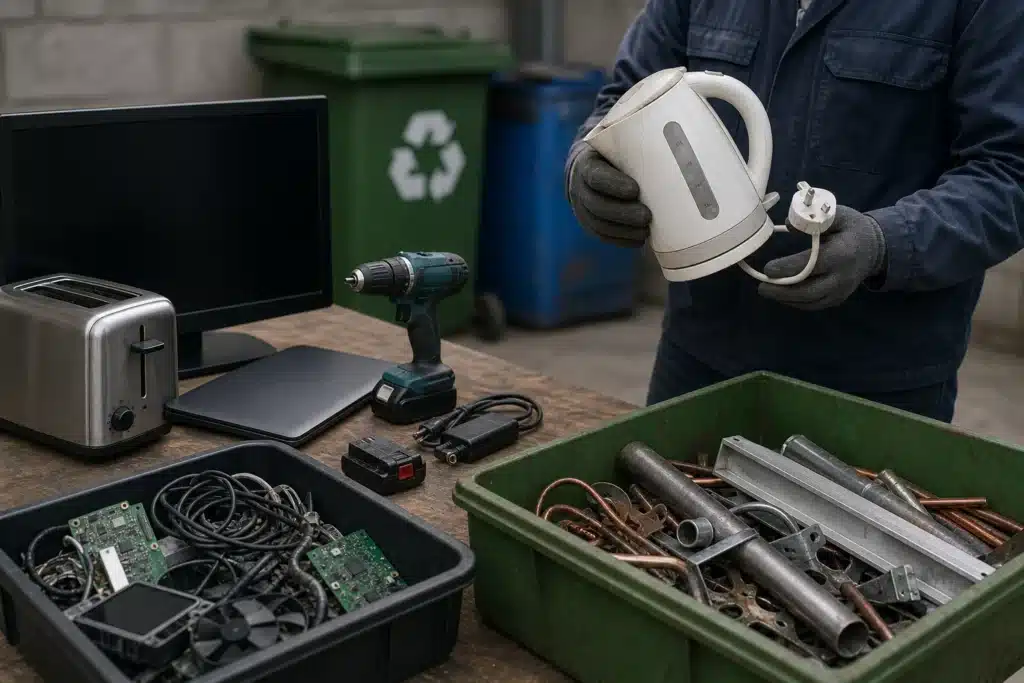
Can electrical items go with scrap metal collection in London?
Usually, electrical equipment should be treated as electrical waste first, not merely as metal. A toaster, laptop, cordless drill, television, charger or cable may contain circuit boards, batteries, plastics, screens or other components that affect how it must be handled. The fact that an item has a steel case, copper wiring or aluminium parts does not make it suitable for an ordinary mixed-metal load.
The safest answer to “Can this go with my scrap?” is therefore: do not presume it can. Put the item to one side, note what it is, whether it is complete or damaged, and whether it uses a battery, mains lead, screen or cooling system. Then check the route with the retailer, household recycling centre, authorised electrical-recycling service or collector concerned.
This matters especially during a tenancy change, office refit, workshop upgrade or building works. A pile may look like straightforward metal, yet contain battery tools, alarm panels, computer equipment, lighting controls, chargers or cables with plugs attached. Sorting those categories before collection helps prevent unsuitable electrical waste being added to a load intended for metal recycling.
For scrap metal collection in London, Premier Scrap Trading Ltd should be contacted first about clearly described, eligible non-hazardous material. The business can confirm whether a proposed collection route is suitable. Do not assume acceptance of WEEE, batteries, vapes, fridges, other cooling equipment or hazardous components.
If your load is uncertain, take a slower, safer approach. Separate obvious non-electrical metal from anything with a plug, battery compartment, charging port, display, motor control, circuit board or refrigerant system. That distinction is more useful than trying to decide what an item might be worth before its handling route is clear.
What WEEE recycling 2026 means in practice
WEEE means waste electrical and electronic equipment. In everyday terms, it covers discarded products that need electricity, batteries or charging to work. It can include domestic appliances, IT equipment, televisions, tools, phones, lighting equipment and many workplace devices. The category is broad, which is why a visual check alone is not always enough.
In the context of WEEE recycling 2026, it is important to separate current operational guidance from policy development. The government page on reforming producer responsibility for electrical waste was published on 28 December 2023 and updated on 10 December 2024 with a summary of responses and a government response. It sets out future direction and next steps; it should not be read as confirmation that a new set of reforms took legal effect in 2026.
The practical official guidance is current: GOV.UK’s WEEE evidence and national protocols guidance was updated on 15 July 2026. It identifies separate WEEE streams, including cooling appliances, vapes and electronic cigarettes, and other small mixed WEEE. This is a useful reminder that “electrical scrap” is not one uniform material category.
For an individual householder or small business, this is not legal advice and it does not mean you need to become a waste specialist. It does mean taking reasonable care over identification and using a receiving route that has confirmed the item. Duties and arrangements can depend on the holder, the item’s condition, the quantity involved and the organisation receiving it.
There is also a useful order for decision-making. If an item still works, consider whether reuse, repair or donation is appropriate through a suitable organisation. If it is end-of-life electrical equipment, look for a WEEE route. If it contains a battery or is damaged, treat that feature as the immediate issue. Only clearly non-electrical metal should be considered separately for a metal collection.
Separate electrical waste before booking any collection
Good separation is not complicated, but it needs to happen before a van arrives or a trip is made to a recycling site. Do not put an uncertain item into a mixed pile simply because it is heavy, metallic or inconvenient to store. A few labelled groups will give you a much clearer conversation with the receiving organisation.
A simple sorting framework
- Potentially reusable electrical items: Complete equipment that may still work and may be suitable for a reuse route.
- Electrical waste: Appliances, IT equipment, tools, screens, chargers and other items needing electrical or electronic treatment.
- Loose batteries: Button cells, rechargeable packs and batteries removed by their intended user-accessible method where no dismantling is involved.
- Vapes and e-cigarettes: Keep these apart from other waste and metal.
- Cooling appliances: Fridges, freezers and other equipment with a cooling system need a specialist route.
- Clearly non-electrical metal: Metal items with no electrical parts, batteries, electronics or cooling components.
Keep each group physically separate where possible. For example, do not place a box of power tools on top of loose copper pipe, and do not use an old appliance as a container for cable or metal offcuts. The aim is to avoid accidental mixing, damage and uncertainty when the material is handed over.
It is sensible to keep manufacturer labels, model information or photographs where an item is unusual. Facilities managers clearing an office, landlords dealing with abandoned belongings and tradespeople sorting site materials may not know the history of every object. A clear description such as “battery-powered drill with battery still fitted” is more helpful than calling it “mixed scrap”.
Do not open, break down or dismantle electrical equipment to improve its metal content. Components can be damaged, batteries can be disturbed and the final route may change. Regulated treatment operators work under specific requirements; householders and ordinary site clear-outs should not copy industrial treatment steps.
For broader information on metal categories that may be relevant after electrical items have been separated, see scrap recycling in London. Collection eligibility still needs to be confirmed for the actual material presented.
Lithium battery and vape safety
Lithium batteries deserve particular care because physical damage, heat and incorrect disposal can create a fire risk. This includes loose rechargeable batteries, battery packs, batteries in tools or devices, and batteries contained in vapes and e-cigarettes. Keep them away from ordinary metal scrap, household recycling and general waste while you identify an appropriate route.
Do not crush, puncture, open, dismantle or deliberately damage a battery. Do not place batteries loose in a mixed bag of metal, cable or electrical equipment. Do not attempt to remove an internal battery from a device: keep the item intact and seek advice from a suitable specialist service or the receiving organisation.
London Fire Brigade states that vapes and e-cigarettes must not be put in regular rubbish or recycling bins because damaged batteries can start fires. It points users towards retailer take-back, household recycling centres and electrical-recycling drop-off points. That advice applies whether the vape is disposable, rechargeable, apparently empty or no longer working.
Store items awaiting disposal in a dry place where they are less likely to be knocked, crushed or exposed to heat. Keep them out of reach of children and avoid leaving them loose in a vehicle, toolbox or skip. If an item appears swollen, leaking, burnt, hot or otherwise damaged, do not transport it in a normal mixed load. Contact an appropriate specialist service for advice on the safest next action.
Official facility guidance says that batteries and potentially leaking components must be stored separately and securely at permitted WEEE facilities, and that lithium-ion batteries must be recognised, marked and stored as a fire hazard. This explains why separation matters. It is not an instruction for householders, landlords or tradespeople to remove batteries from equipment themselves.
For searches around lithium battery disposal London, check the current acceptance rules of the particular retailer, recycling centre or specialist service before travelling. Services may set their own conditions according to battery type, damage, quantity and how the item is presented.
Common electrical items and the safest next step
The table below is a starting point, not a substitute for confirmation. Local arrangements, item condition and the receiving organisation’s rules can change. When an item is mixed, damaged or unfamiliar, describe it rather than guessing.
| Item or material | Key feature to identify | Safer route to check |
|---|---|---|
| Mobile phone or tablet | Contains a rechargeable battery and electronics. | Retailer take-back, household recycling centre or authorised WEEE route. |
| Laptop or desktop computer | Battery may be fitted; contains data-bearing and electronic parts. | Suitable WEEE or reuse route; keep intact and consider data handling separately. |
| Small appliance | Plug, motor, circuit or heating element. | Retailer electrical take-back or a suitable WEEE route. |
| Power tool | May have a fitted or removable rechargeable battery. | Check WEEE and battery arrangements before transport. |
| Loose battery | Potential fire hazard if damaged or mixed. | Dedicated battery route confirmed by the receiving service. |
| Vape or e-cigarette | Battery and electronic components. | Retailer take-back, recycling centre or electrical-recycling point. |
| Television or monitor | Screen and electronic components. | Appropriate WEEE route. |
| Fridge or freezer | Cooling system and specialist treatment needs. | Specialist cooling-appliance route only. |
| Plugged-in cable or charger | Electrical item, possibly with electronics. | Check WEEE route; do not add automatically to metal. |
| Copper pipe or steel shelving | Clearly non-electrical and non-hazardous metal. | Ask about an eligible metal collection route. |
Items containing data need an additional consideration. Before using a reuse or WEEE route for a computer, phone or storage device, take appropriate steps to manage personal or business information. Do not damage the equipment in an attempt to remove storage components or batteries. If you are responsible for workplace equipment, follow your organisation’s information-security process as well as its waste procedure.
For electrical scrap recycling London, the useful distinction is not whether the object contains metal, but whether it remains a complete electrical product or has a feature requiring specialist handling. A bundle of clean, non-electrical metal is a different proposition from a bundle containing appliances, plugs, chargers or battery-powered tools.
This is also why WEEE recycling 2026 guidance should be applied at item level. A clear description of the object, its condition and its power source gives a receiving service the information needed to direct it appropriately.
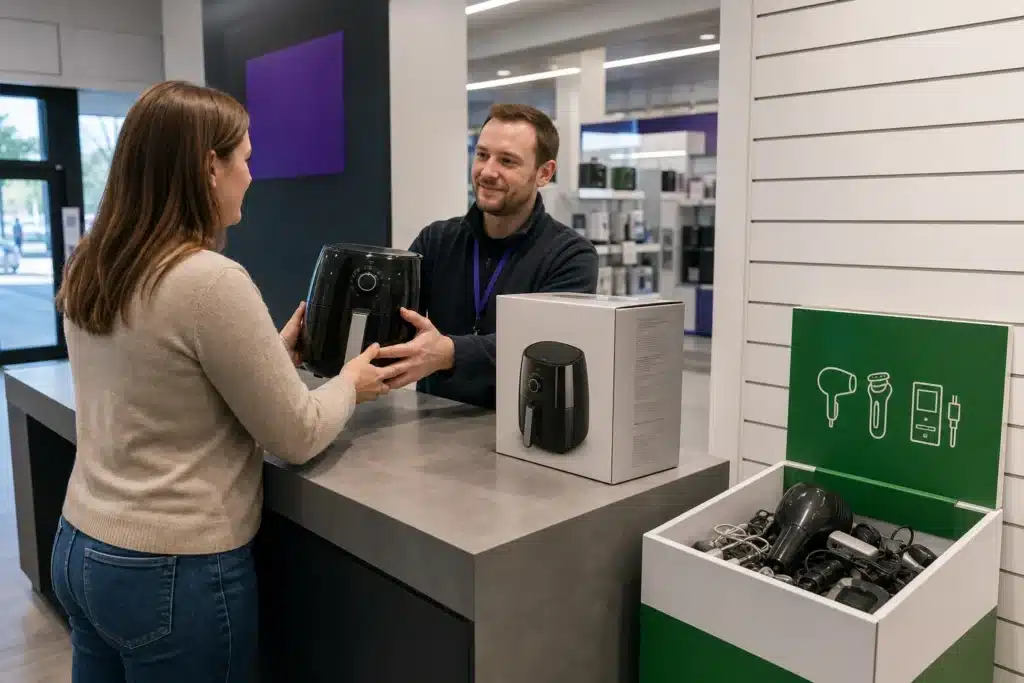
Retailer take-back and other WEEE collection routes
Retailer take-back can be a convenient option when replacing electrical equipment. GOV.UK says retailers must generally provide free like-for-like take-back when a customer buys a replacement item, subject to applicable conditions. In practical terms, ask the retailer what item it will take back, when it can be handed over and whether there are presentation requirements.
There is also a route for very small WEEE.
Larger electrical retailers with sales areas over 400 square metres must take back very small waste electrical items, measuring under 25cm on their longest side, without requiring a purchase and free of charge.
The official guidance includes exemptions and conditions, so check the specific store before making a journey.
Retailer electrical take-back is not the only route. A household recycling centre may accept categories of electrical waste, and authorised electrical-recycling services may provide other options. London arrangements can differ by borough, site operator, item type and date. Check your local authority’s current information and the receiving site’s current acceptance list before travelling.
Businesses, landlords and facilities managers should not assume a household route is suitable for a larger volume or a mixed commercial clear-out. Keep an itemised list, separate battery-containing equipment and ask the proposed service what it can receive. This is particularly helpful for office moves, shop refurbishments and construction handovers where electrical equipment and non-electrical metal may be generated together.
If you are buying a replacement appliance, retailer take-back may reduce the need to store the old one. If you are simply clearing unwanted equipment, the relevant local authority or an authorised specialist route may be more appropriate. The right answer depends on the item and route, rather than on a broad promise that all electrical waste can be collected together.
For current conditions, read the official retailer electrical waste take-back guidance. It is a useful check before relying on either like-for-like or very-small-WEEE arrangements.
Cooling appliances, hazardous components and mixed loads
Cooling appliances need special caution. Fridges, freezers and other equipment with a cooling system should be directed to a specialist route and must not be included in an ordinary metal load without prior confirmation. Premier Scrap Trading Ltd does not accept old washing machines or fridges. A washing machine may not be a cooling appliance, but it is still an appliance rather than automatically eligible metal, so confirm its route separately.
Damaged electrical equipment requires the same careful approach. A leaking, scorched, swollen, heat-damaged or unusually odorous item may present a greater risk than an intact product. Do not combine it with other waste, hide it inside a bag or attempt repairs or disassembly solely to make disposal easier. Seek advice from an appropriate specialist service that can assess its route.
Mixed construction and refurbishment waste is another common problem. Metal conduit, pipework, radiators and structural steel may sit beside fire alarms, lighting fittings, cabling, control panels, battery tools and appliances. Separate the categories before arranging a collection. This protects the recycling route and makes it easier to explain exactly what is available.
For established guidance on facility segregation, see the Environment Agency’s WEEE storage and handling measures. The guidance is aimed at permitted facilities, but it reinforces the practical value of not mixing batteries or suspect components into ordinary scrap.
What can be prepared as eligible non-electrical metal scrap
Once electrical equipment has been separated, you may be left with clearly non-electrical metal. Examples can include metal pipe, metal shelving, radiators, steel fixtures, clean metal offcuts or other items with no plugs, batteries, circuit boards, screens, cooling systems or hazardous components. Eligibility should still be confirmed before collection.
Material value is not automatic. Metal type, grade, contamination, weight, condition and current demand can all affect whether material has resale value. If a collection is appropriate, material may be weighed and an eligible payment may be made by bank transfer after weighing. Current prices move, so use the business’s scrap metal prices information as a starting point and ask for an up-to-date view when discussing your specific material.
Preparation should be straightforward and safe. Keep clean metal separate from household rubbish, timber, plasterboard, insulation, soil, liquids and electrical equipment. Do not strip cable, break appliances apart or remove uncertain parts merely to create a cleaner-looking load. If cable still has plugs, chargers or electrical fittings attached, describe it as such and ask about the correct route.
For customers arranging scrap metal collection in London, access matters too. Tell Premier Scrap Trading Ltd about the approximate volume, where the material is located, stairs or restricted access, parking limitations and whether any item is electrical or potentially hazardous. This helps establish whether the material and proposed collection arrangement are suitable before a visit is planned.
More information about the company’s Greater London service area is available on the Greater London areas covered page. Coverage and operating arrangements should be checked when you make contact; this information was checked on 3 August 2026.
A practical WEEE recycling checklist for London
Use this checklist before disposing of an electrical item, clearing a property or booking any metal collection.
- Identify the item. Record what it is and, where useful, its make or model.
- Look for electrical features. Check for a plug, charging port, battery, screen, circuit, motor control or cooling system.
- Keep equipment intact. Do not crush, puncture, open or dismantle batteries or electrical items.
- Separate the categories. Keep WEEE, loose batteries, vapes, cooling appliances and clearly non-electrical metal apart.
- Check the appropriate route. Ask a retailer, recycling centre or authorised electrical-recycling service what it currently accepts.
- Describe damaged items accurately. Do not place leaking, swollen, burnt or heat-damaged items in a routine mixed load.
- Confirm metal collection eligibility. For non-hazardous, non-electrical metal, give the collector a clear description before booking.
This process supports safer WEEE recycling 2026 decisions without turning a practical clear-out into a technical exercise. It also helps landlords and property managers leave clearer instructions for contractors, tenants and maintenance teams. A short written note can prevent a battery tool or abandoned vape being thrown into a general mixed pile later.
For vapes specifically, London Fire Brigade’s vaping and e-cigarette safety advice is a useful public-safety reference. Check the current local route at the point of disposal, particularly if the device is damaged or if you have several items.
Date checks and next steps for WEEE recycling 2026
Rules, retailer processes and local site acceptance criteria can change. The government’s electrical-waste reform consultation outcome was last updated on 10 December 2024, while the WEEE evidence and national protocols guidance was updated on 15 July 2026. These dates provide useful context, but they do not replace checking the organisation that will actually receive your item.
The official electrical waste producer-responsibility consultation outcome explains the government’s stated future direction. For current handling context, consult the GOV.UK WEEE evidence and national protocols guidance. For everyday disposal decisions, use the most direct source available: the particular retailer, local authority service, household recycling centre or authorised specialist route.
For Premier Scrap Trading Ltd’s own collection arrangements, contact details and current enquiries are available through the contact page. Service-area coverage and operating arrangements were checked on 3 August 2026. Describe the material honestly and include any electrical, battery, cooling or damage concern so that the correct route can be considered.
The central message is cautious but practical: electrical waste should stay identifiable, batteries and vapes should stay separate, and non-electrical metal should be clearly described. That approach supports safer decisions for households and commercial sites alike, while allowing suitable metal to be considered for recycling on its own merits.
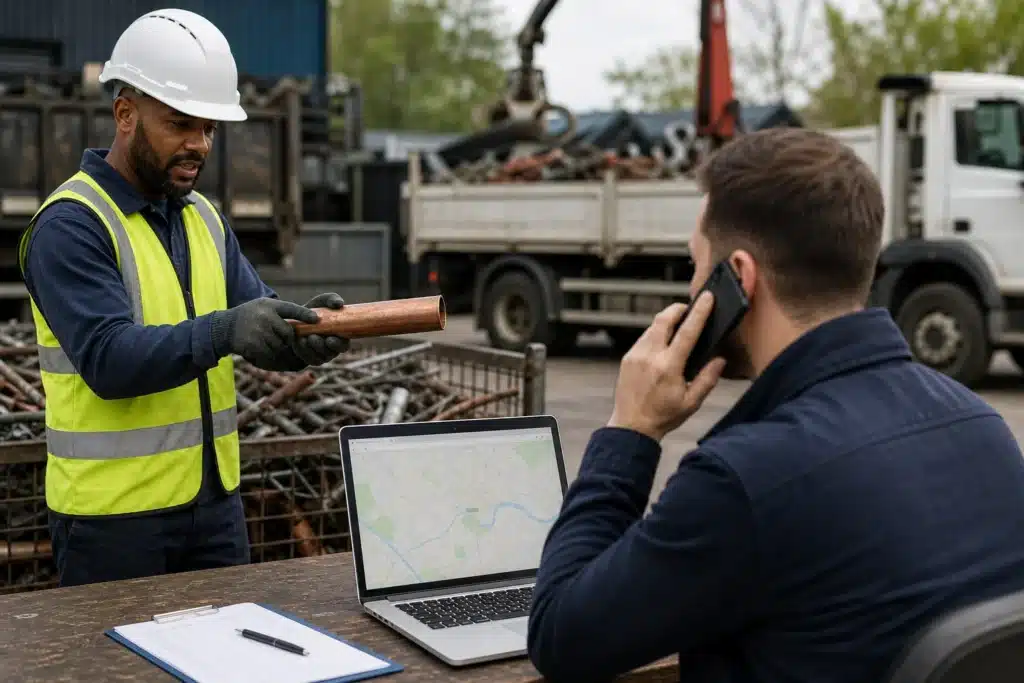
Confirm your eligible scrap metal collection route
If you have eligible, non-hazardous and clearly non-electrical scrap metal in Greater London, contact Premier Scrap Trading Ltd to describe the material, access and approximate quantity. Call 07931 361 034 or book a collection online to confirm what can be collected and ask for current prices.
Related guides
Sources and date checks
- Waste electrical and electronic equipment (WEEE): evidence and national protocols guidance
- Electrical waste: retailer and distributor responsibilities — take back waste in store
- Vaping and e-cigarettes
- WEEE: appropriate measures for permitted facilities — waste storage, segregation and handling
- Electrical waste: reforming the producer responsibility system
WEEE recycling questions
Can I put electrical items in a scrap metal collection?
Do not assume that electrical items can enter a normal metal collection. Keep them separate and confirm the route with the receiving service before booking.
Where should lithium batteries go in London?
Use a dedicated battery route confirmed by a retailer, household recycling centre or suitable specialist service. Keep batteries separate from metal and other waste.
Can I put vapes in my household rubbish bin?
No. London Fire Brigade says vapes and e-cigarettes should not go in regular rubbish or recycling bins because damaged batteries can cause fires.
Can I remove a built-in battery before recycling an item?
Do not dismantle an item or attempt to remove an internal battery. Keep the equipment intact and ask an appropriate receiving service for guidance.
Can I return old electrical equipment to a retailer?
Retailers generally provide free like-for-like take-back when you buy a replacement, subject to conditions. Qualifying larger electrical retailers also have very-small-WEEE take-back duties, with exemptions.
Are fridges accepted with ordinary scrap metal?
Fridges and other cooling appliances need a specialist route. Premier Scrap Trading Ltd does not accept old washing machines or fridges.
What should a business do with mixed electrical and metal waste?
Separate electrical equipment, batteries, vapes and cooling appliances from clearly non-electrical metal. Keep an item list and confirm suitable routes before transport or collection.
What information should I give before booking a metal collection?
Describe the material, approximate quantity, access conditions and any electrical, battery, cooling or damage concern. This helps confirm whether the proposed collection route is suitable.